
Every fall it's the same story around Syracuse: the nights turn cool, and the sunny side of the house fills up with bugs. Stink bugs creep along the window trim, boxelder bugs cluster on the siding, ladybug lookalikes pile into the corners, and sluggish flies turn up at the attic window. They're called fall invaders, and they're looking for a warm place to spend the winter: your house. Here's why they pick it, how they get in, what to expect once they're inside, and how to get ahead of them.
Why fall invaders pick your house
These insects spend the summer outdoors, feeding on trees and crops or, in the cluster fly's case, growing up inside earthworms. In the fall they need shelter for the winter. In nature that means loose bark, rock faces and hillsides; to them, a house works just as well.
The sunny side of the house
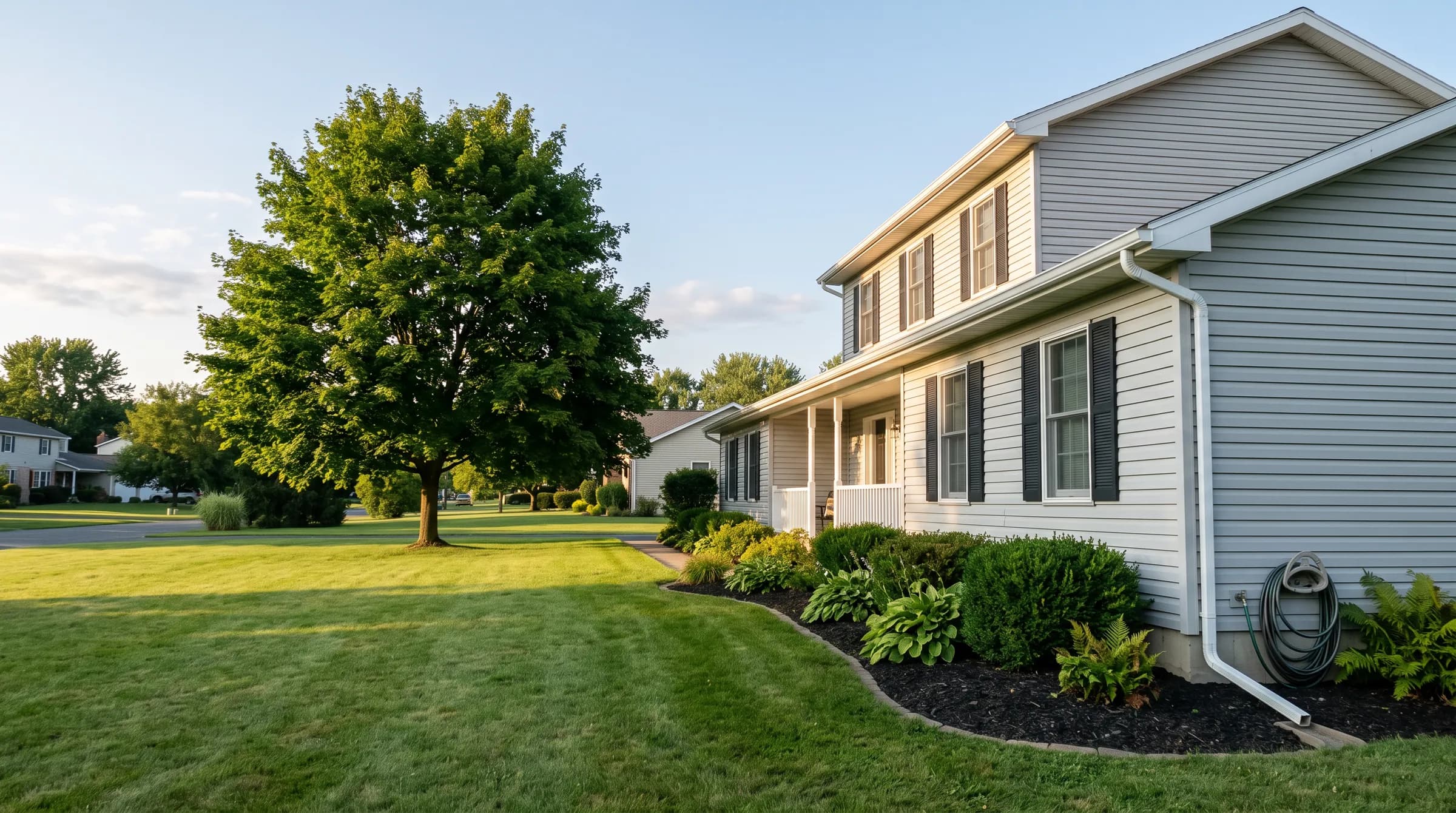
Fall invaders favor south- and west-facing cracks and crevices, which soak up the most sun and shelter them from wind and cold. That's why the warm side of your house can be covered while the shady side stays clear. Lady beetles gather on sunny, warm afternoons that follow a cold night, and once stink bugs settle on a house, they give off a scent that draws more stink bugs to the same spot. For stink bugs and boxelder bugs, the color of the house doesn't seem to matter, and boxelder bugs can fly more than 2 miles to find a winter spot, so a boxelder tree down the road is close enough.
Is it a bad year?
Some falls are worse than others. Boxelder bug numbers run higher after a warm spring and a hot, dry summer, and Cornell Cooperative Extension in Orleans County credited the hot, dry summer of 2025 with a bonus crop of boxelder bugs looking for a winter home. In October 2025, Spectrum News in Rochester tied a busy stink bug fall across upstate New York to a warm, sunny year. And in 2017, an entomologist at the Hudson Valley Research Laboratory told the Times Union that stink bugs were especially prevalent that year in Syracuse, Buffalo, the Finger Lakes and the Hudson Valley.
Meet the four
- Brown marmorated stink bugs. Shield-shaped, 1/2 to 5/8 inch long and marbled brown, with light bands on the antennae and legs. An invasive insect first found in the United States in 1998, they had turned up in all but 6 of New York's 62 counties by 2017. Crush one and you'll know how they got their name.
- Boxelder bugs. About 1/2 inch long, narrow and black with red markings, including three red lines just behind the head. They feed mainly on female boxelder trees, and also on maples, ash, grapes and fruit trees.
- Multicolored Asian lady beetles. They look like ladybugs, in shades from yellow to red, with or without spots. The giveaway is a W or M shape on the white area behind the head. Outdoors, they're helpful predators of aphids and other garden pests.
- Cluster flies. Like a house fly, but with a gray body and yellow hairs on the thorax, 1/4 to 3/8 inch long. Their young live as parasites of earthworms, and the adults are also called attic flies, for where they spend the winter.
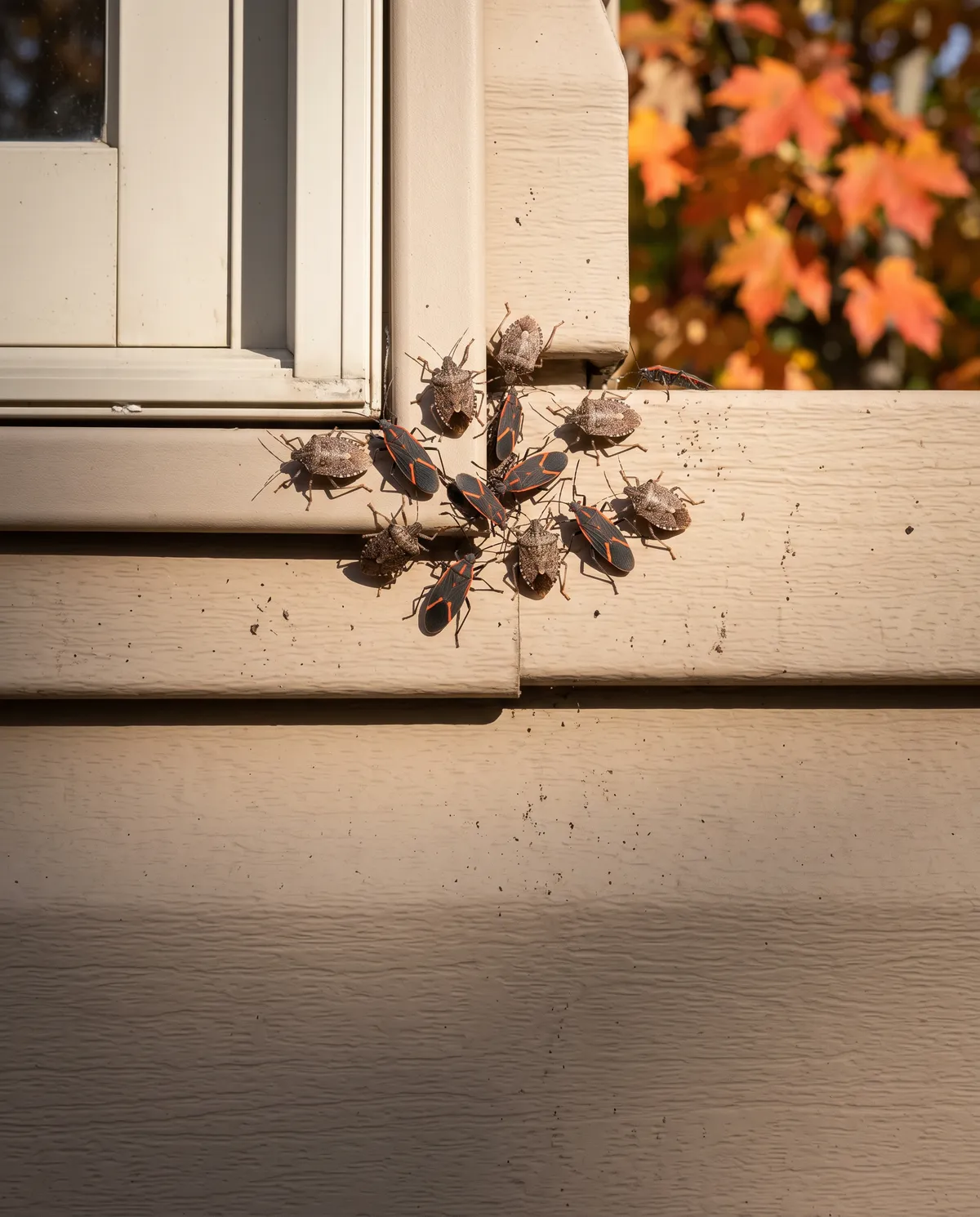
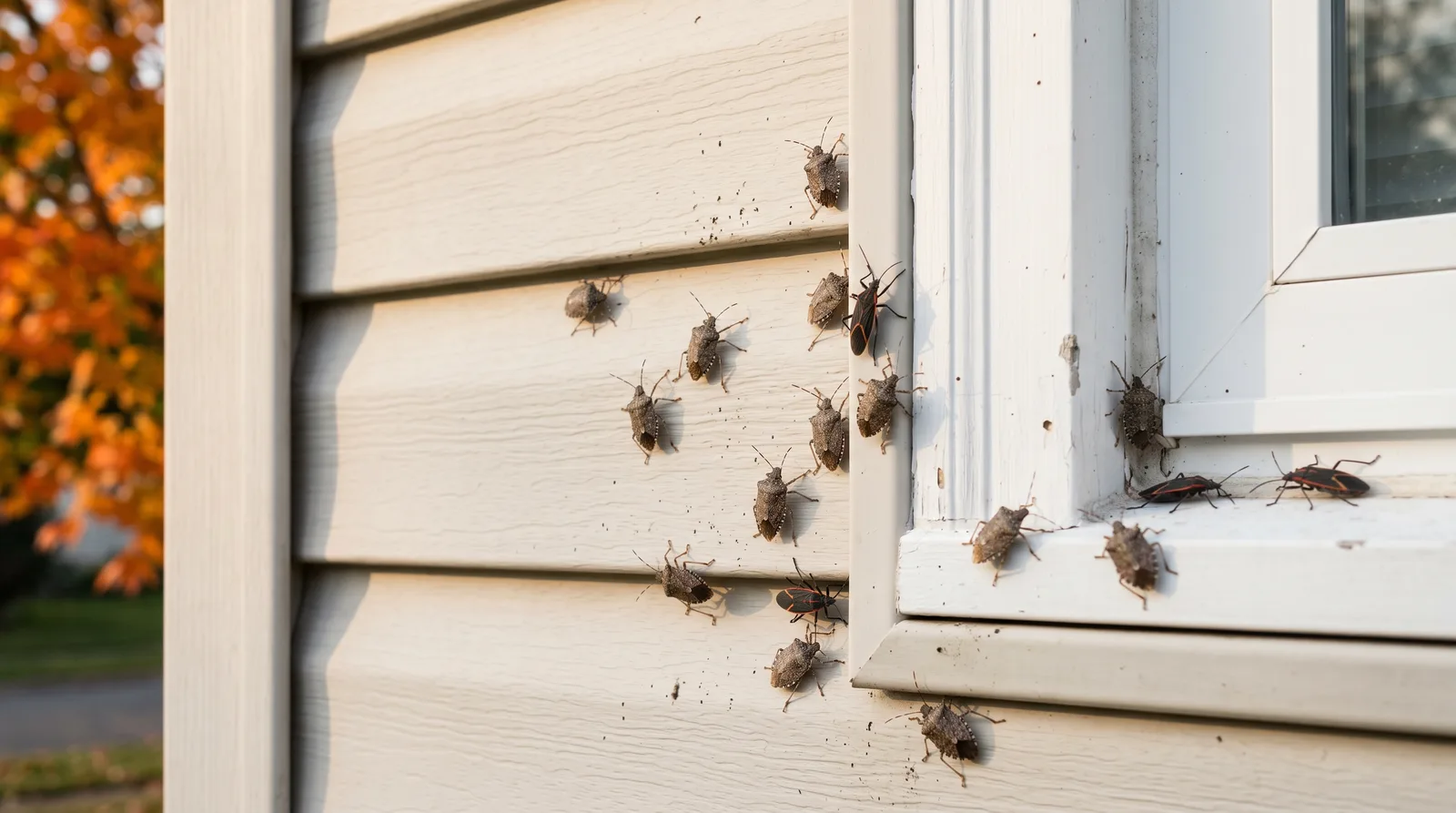
Stink bugs and boxelder bugs
Gathered on a sunny wall, right at the window trim.
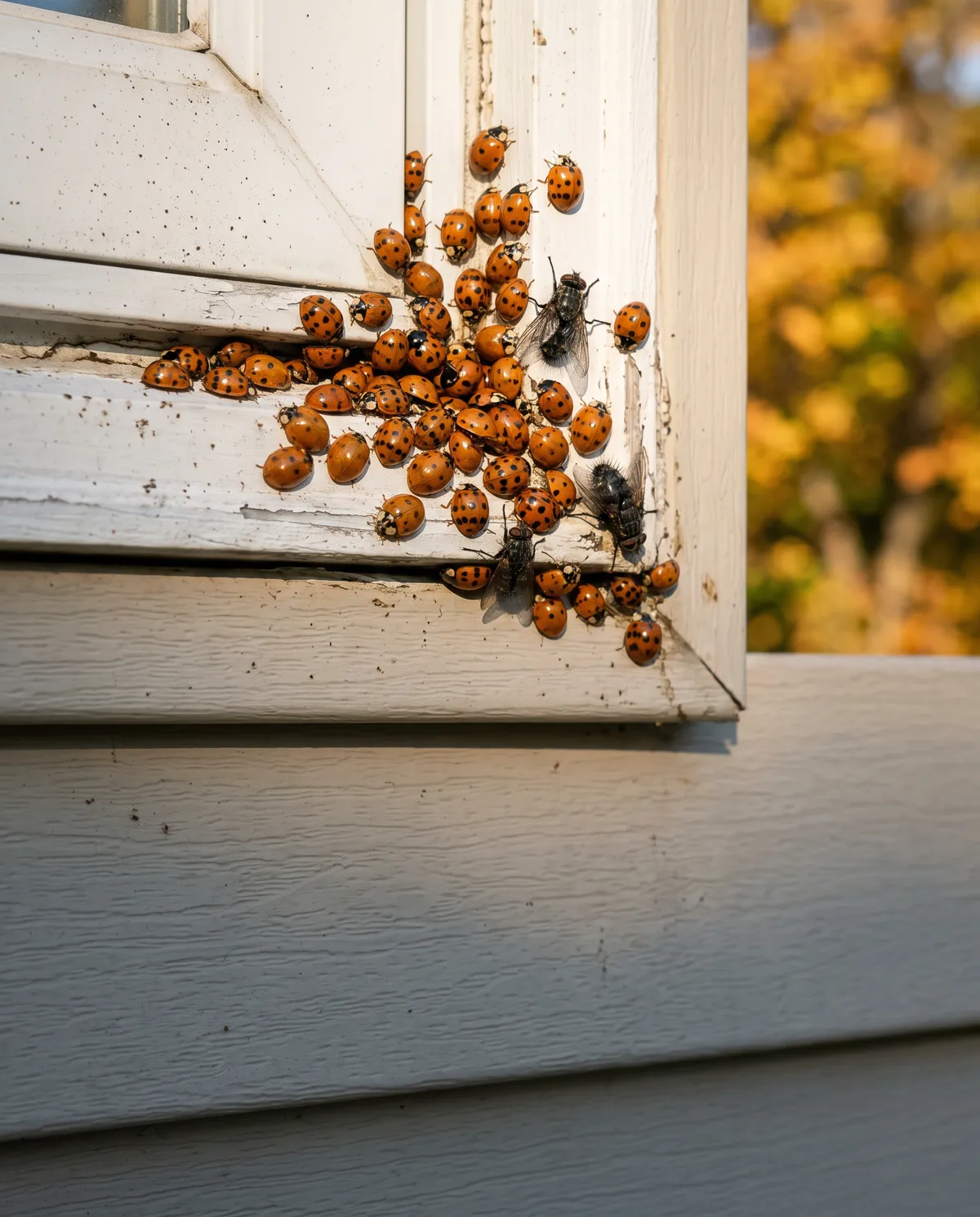
Lady beetles and cluster flies
Crowding into the corner of a window frame.
Those are the two pairs our fall invader treatment is built around: stink bugs and boxelder bugs, and cluster flies and Asian lady beetles.
When fall invaders show up around Syracuse
No one has measured these dates in Central New York, so this calendar comes from New York and Northeast sources: New York's own extension services, plus New Hampshire and Pennsylvania. Treat it as a guide, not a schedule.
| When | Fall invaders | Happy Habitat |
|---|---|---|
| Late August to mid-September | Young stink bugs come to lights at night. In early September, boxelder bugs and stink bugs start massing on buildings in New Hampshire. | Time to ask about the fall treatment. |
| Mid-September through October | The big gathering on sunny south and west walls. In Pennsylvania, lady beetles start around the beginning of October, on sunny, warm afternoons after a cold night. | The fall invader treatment, as the weather cools. |
| After the first freeze | Activity slows outside. The first freeze at Syracuse's airport comes around October 19 in a typical year. | |
| Winter | Bugs tucked into walls and attics wake on warm days and turn up at windows and lights. | |
| April and May | They head back outside: stink bugs in April, boxelder bugs from late April to early May, and lady beetles in spring. |
How they get in
Fall invaders don't need much of an opening. Pests get into a house through a crack, an open door, a hole in a screen, a gap in siding or soffits, or on a piece of firewood or a potted plant. Stink bugs work into the wall voids around windows, doors, outlets, light fixtures and air conditioners. The usual ways in:
- Gaps around window and door frames.
- Where wires, pipes and other utility lines enter the house, especially on the south and west sides.
- Torn or loose window screens.
- Gaps in siding and soffits. Soffits lead into the attic, and from there bugs follow light and heat into the living space.
- Window air conditioners and fans.
- Firewood and potted plants carried inside.
What happens once they're inside
Inside, fall invaders mostly wait for spring, tucked into wall voids, attics and crawl spaces. They don't breed indoors or damage the house, and they leave stored food and furniture alone. They're still a nuisance:
- The smell. Stink bugs and boxelder bugs give off a strong odor when they're crushed, and handling crushed stink bugs can irritate the skin.
- Spots and stains. Boxelder bug droppings can spot fabrics and painted walls, and lady beetles can stain upholstery, curtains included.
- Lady beetles can bite. Their mouths are small, but they can bite, and large numbers indoors can cause allergy problems in sensitive people.
- Flies at the attic window. Cluster flies don't feed or breed indoors, but they gather in attics and turn up, sluggish, at windows on warm winter days.
- Warm-day wake-ups. On warm winter days, stink bugs and other fall invaders become active, crawling to windows by day and flying toward lamps and TVs at night. In 2018, CNY Central reported from Syracuse that it's not uncommon to see stink bugs in the house through the winter, and that they get more active as it warms up.
Most boxelder bugs die indoors. The rest head back outside in spring.
Simple things that help
A few habits make your house a harder place to get into. They're worth doing every year, and they pair well with a fall treatment on the outside of the house.
Seal up before September
New Hampshire's extension service suggests caulking and sealing before early September, when the bugs start gathering. Start on the south and west sides and check:
- Gaps around window and door frames.
- Spots where wires, pipes and utility lines go through the wall.
- Window screens: tight in the frame, with no tears.
- Openings around window air conditioners and fans.
- Sweeps at the bottom of doors, garage doors included.
In Syracuse, a SUNY College of Environmental Science and Forestry entomologist's advice to CNY Central was to seal the small cracks and spaces near windows, doors and attics. One caution: don't seal soffit vents or weep holes shut. They need airflow, so cover them with screen or mesh instead, or you can end up with moisture problems.
Keep the attic closed off
Keep attic doors and fold-down stairs closed through the winter, and close the fireplace flue when it isn't in use.
Vacuum, don't squash
For the ones that get inside, a vacuum works better than your hand: crushing stink bugs and boxelder bugs releases the smell. The vacuum may smell for a while, so empty the bag or canister promptly. Cluster flies are slow fliers and easy to swat.
Tidy up along the foundation
Trim plants touching the house, and clear leaf piles and debris away from the foundation. If boxelder bugs bunch up on the siding, a strong stream from the hose washes them off.
Get ahead of them in the fall
Once fall invaders are tucked into the walls, they stay there until warm days and spring draw them out. So the time to deal with them is outside, before they gather. Penn State Extension, writing for Pennsylvania, puts a licensed professional's exterior treatment for these insects in the fall, just before they gather; for lady beetles, that's late September or early October.
That's what our fall invader treatment is for. In the fall, as the weather cools, we treat the outside of your home where these bugs gather and get in: the foundation, entry points, eaves, windows and doors. Pick stink bugs and boxelder bugs, cluster flies and Asian lady beetles, or all four, and ask in late summer, before the gathering starts. See the fall extras.
Ants, spiders and wasps look for the same spots around the house, and our exterior pest control treats there for them. Our guide to ants, spiders and wasps covers them.