
A brown patch by the driveway, thin grass under the maple, a whole lawn gone straw-colored by August: a tired lawn around Syracuse can come from a lot of different things, and the fix for one does nothing for another. Watering won't bring back roots that grubs have eaten, and a grub treatment won't open up packed soil. Here's how to read what your lawn is telling you, cause by cause, and what fixes each one.
Why is my grass turning brown? Start with the pattern
Before you buy seed or a bag of anything, take a slow walk across the lawn and answer four questions:
- When did it show up? In a July or August dry spell, as the snow melted, or in late summer and fall?
- What shape is it? Scattered patches, a strip along the pavement, round spots, or thin all over?
- What's around the edges? Yellow edges spreading outward, or a ring of greener grass around a dead center?
- Does it pull up? Tug a handful of the brown grass. Grass that holds tight is still rooted. Turf that lifts like a loose carpet has lost its roots.
Then find your lawn below.
Diagnose it by symptom
Brown all over in a dry spell: dormant, not dead
How to check. It shows up in July or August after a stretch without rain, across the sunny parts of the lawn, and the grass is still rooted when you tug it. Folded blades, a blue-gray color and footprints that stay in the grass are the signs a lawn wants water.
What it means. Most lawns here are a mix of cool-season grasses: Kentucky bluegrass, perennial ryegrass and fescues. In a Syracuse July, with afternoons averaging about 82 F, heat and dry weather slow them down and the blades can turn brown, but the plants are likely not dead. Drought stress is rarely lethal: Cornell notes that most lawns survive on a fraction of an inch of water over three weeks.
What fixes it. Let it rest, or water it back. If you water, aim for about an inch a week from rain and the hose together, in longer soakings two or three times a week rather than a little every day. Hold off mowing while it's dry and brown. When rain and cool nights return, it greens back up. Areas that thin out and don't fill back in are a job for fall overseeding.
Turf that peels up like a carpet: grubs
How to check. Grab the brown turf and pull. If it lifts and rolls back like a carpet, look in the soil underneath for C-shaped white grubs with six legs; a trowel or garden fork makes it easy. Skunks, raccoons and crows tearing up the lawn are another giveaway: they're digging for grubs. Damaged turf also feels spongy underfoot, and from a distance it can look like drought.
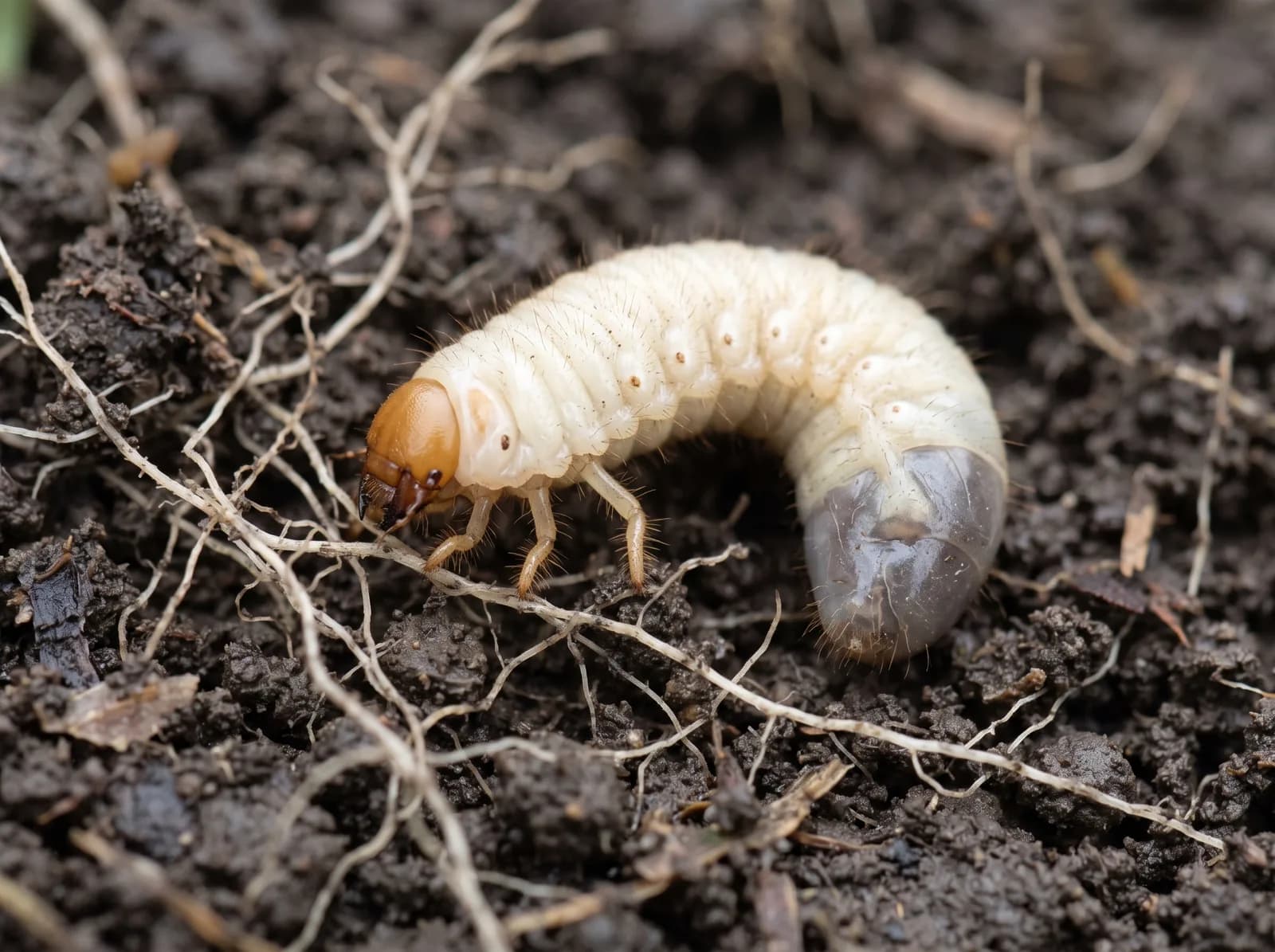
What it means. White grubs are the young of beetles. The major grubs that affect lawns here include the Japanese beetle and the European chafer. They live in the soil and feed on the roots, and the damage can be quick and devastating. They feed from September into November and again from April into June, so you may not know they're there until the damage shows.
What fixes it. Prevention, before the damage. A preventive grub treatment goes down in early summer, before grubs feed on the roots, and it comes with every level of our lawn program. If grubs are already doing damage, a heavy infestation can need a curative treatment, so tell us what you're seeing when you ask for your estimate. Fall feeding helps a lawn recover from grub damage, and overseeding fills the bare spots they leave. See what lives below the soil and on the surface, or read our guide to grubs and lawn insects.
Yellow-edged patches in full sun: chinch bugs or sod webworms
How to check. Chinch bug damage looks like drought damage: large brown patchy areas of dead grass in sunny, dry spots and sandy soil, often along the edge of the driveway or walk. It turns yellow, then reddish brown, and it shows in July and August. The tell: unlike drought, it doesn't green up when the rain comes back. To look for chinch bugs, press an open-ended coffee can about 2 inches into the soil at the edge of a patch, fill it with water and watch for small bugs floating up. Sod webworms leave small yellow or brown patches with the grass chewed off at ground level, tiny piles of green droppings, and birds working the lawn. The tan moths that flutter up as you walk across the lawn could indicate an infestation.
What it means. Both live on the lawn's surface, not below the soil, so grub prevention doesn't reach them.
What fixes it. Lawn Pest Defense, which treats the lawn's surface through the season for chinch bugs, sod webworms, crane flies and surface ants. It comes with the Better and Best levels of a lawn estimate. Thin spots they leave behind fill in with overseeding.
Thin all over, hard soil: compaction
How to check. Try Jim's screwdriver test: if you can't easily push a screwdriver into the soil, it's time to aerate. Look, too, where water puddles after rain and drains slowly, and dig in there with a trowel. Traffic on wet soil is the most common cause, so paths and play areas are the usual suspects.
What it means. Compacted soil is a dense block with little room for air and water, so it keeps water and food from the roots. Thatch, the layer of living and dead plant material between the grass and the soil, can add to it once it nears an inch thick.
What fixes it. Core aeration. The aerator pulls small plugs of soil so water, oxygen and nutrients reach the roots. Seed spread right after needs seed-to-soil contact to germinate: some falls into the holes, and the cores breaking up on the surface cover more of it. Core aeration can help with excess thatch too. It has to be core, never spike: a spike presses the soil around each hole even tighter, and spike aeration often does more harm than good. Aerate every 1 to 2 years, depending on soil composition and traffic, in spring or fall, while your lawn is actively growing. If you're seeding too, late summer and fall are best. See our aeration options.
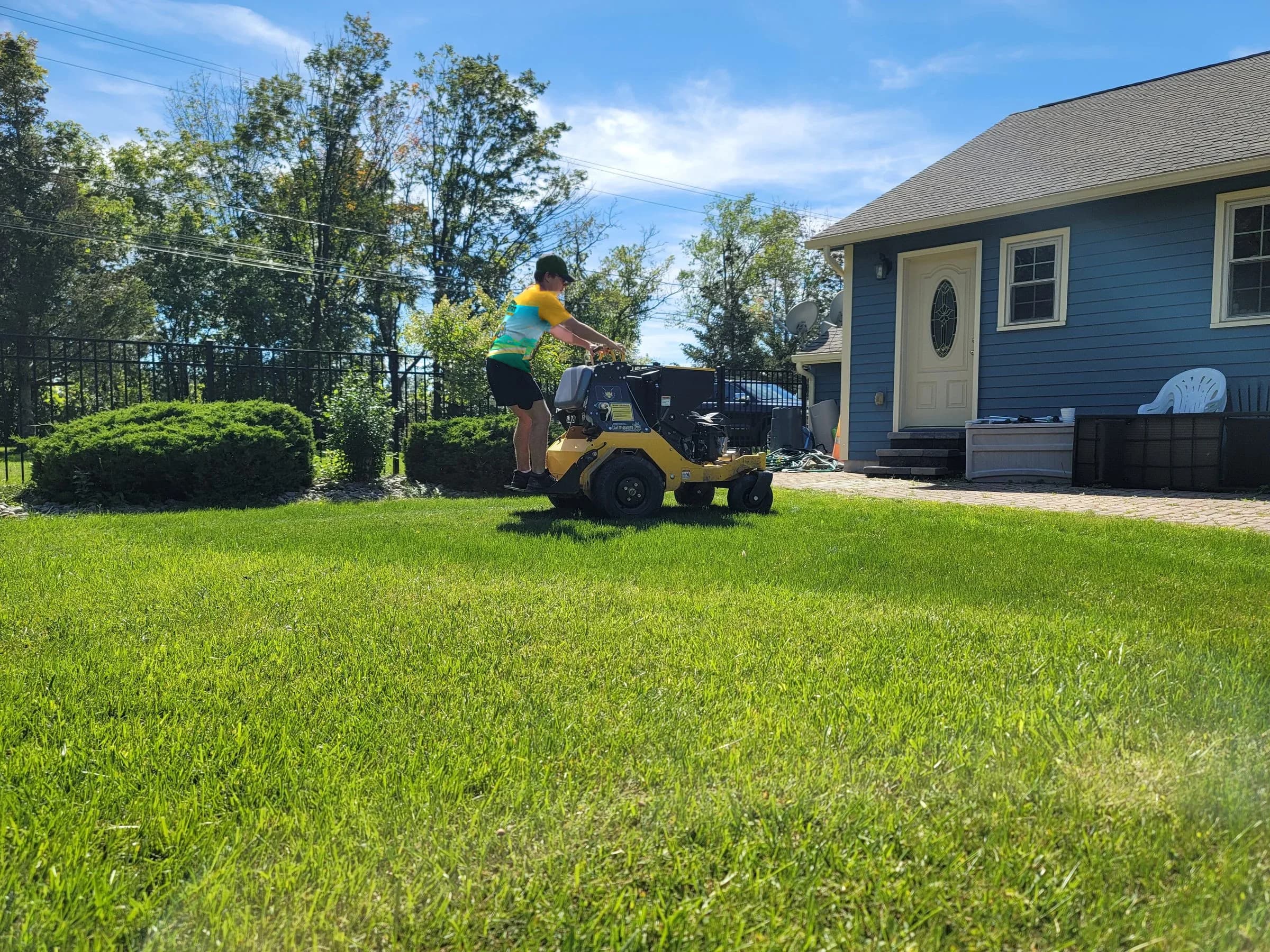
Our core aerator
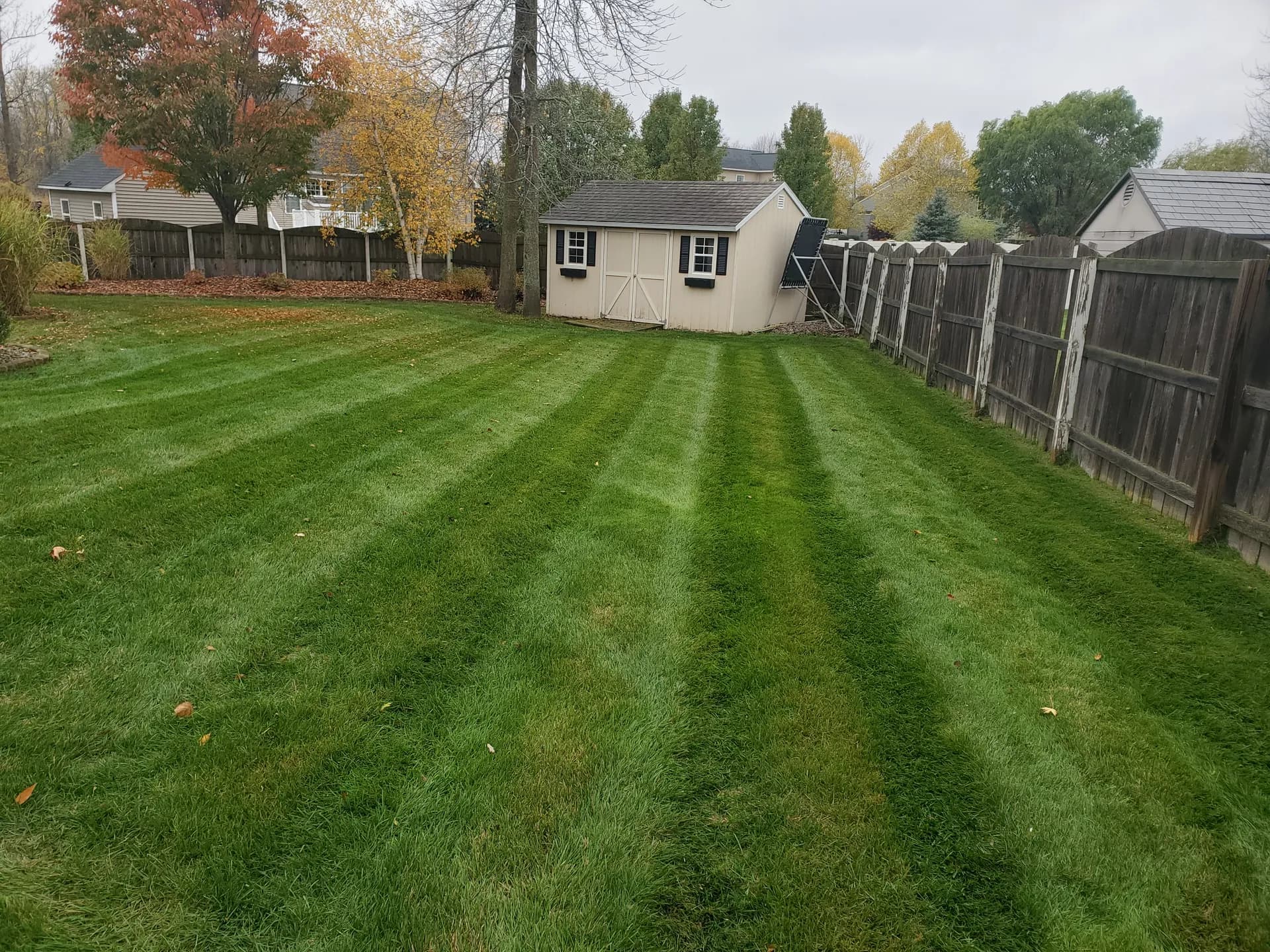
At work on a client's lawn.
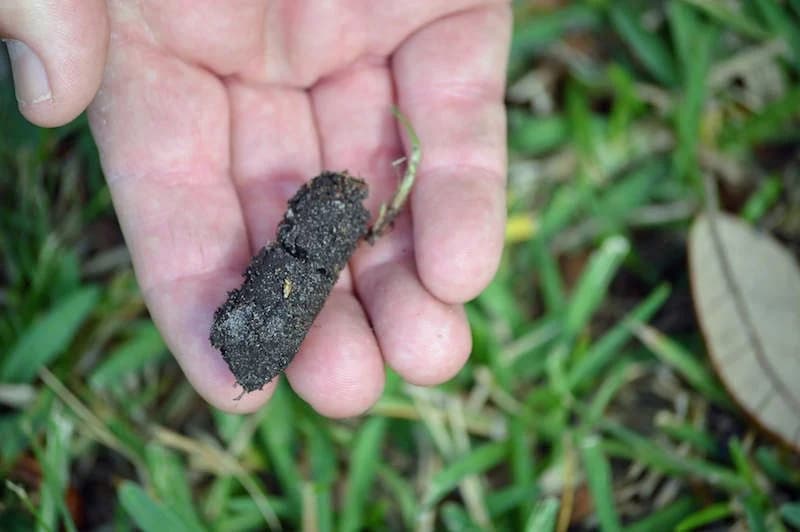
A real soil core
Pulled by our aerator, so water and air reach the roots.
Thin and scalped: mowing too short
How to check. The grass looks thin and stressed right after mowing, high spots look scalped, and the blade tips are ragged and brown.
What it means. Lawns cut lower than 3 to 3.5 inches need more water and fertilizer, and dull blades shred the tips.
What fixes it. Mow at 3 inches or higher; Jim suggests about 4 inches in summer. Never take off more than a third of the blade at once, and keep the mower blades sharp.
Thin in the shade
How to check. Spindly grass under trees and on the shady side of the house, with bare soil showing between the blades.
What it means. Kentucky bluegrass and perennial ryegrass handle shade poorly. Tall fescue handles it well, and fine fescue best of all.
What fixes it. Overseed shady spots with seed that suits them. For spots that get 4 to 8 hours of direct sun, Cornell suggests a fine fescue blend, and late summer into fall is the time to seed it.
Dead strips along the driveway and walk: road salt
How to check. Bare or brown strips right along the sidewalk, driveway or road, showing up as the snow melts, where new seed often fails to come up.
What it means. Syracuse averages about 128 inches of snow a year, and the deicing salt that keeps drives and walks clear can leave bare spots in the grass beside them. Salt can also keep new seed from sprouting and damage young grass.
What fixes it. Flush the salt out with water if the soil drains (a good rain may do it for you), loosen packed soil, and patch the strip with seed. Perennial ryegrass, fine fescues and tall fescue stand up to salt better than Kentucky bluegrass. Aeration and overseeding take on the packed soil and the seeding together.
Round dead spots with a green rim: dog spots
How to check. Round patches of dead grass with a ring of greener grass around the edge, where the dog goes.
What it means. Salts in dog urine leave dead spots like these.
What fixes it. Water the spot well to flush the salts, then patch it with seed.
Matted patches at snowmelt: snow mold and winter damage
How to check. As the snow melts, look for round patches of matted, straw-colored or gray-brown grass, often 1 to 3 feet across, sometimes with a gray, lint-like growth that fades as the grass dries. Smaller bleached spots with a pink edge are another kind.
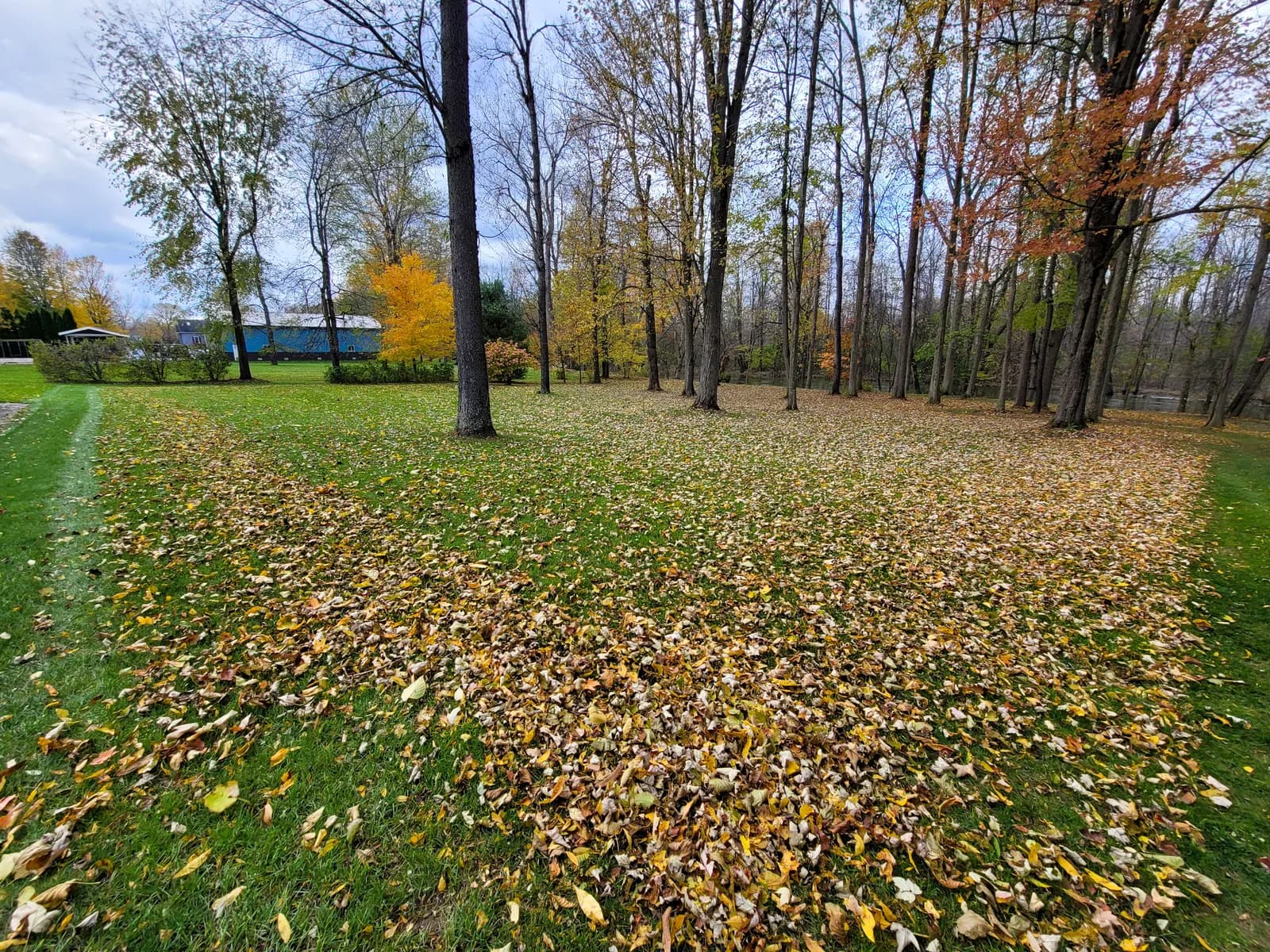
What it means. Snow mold is a lawn disease favored by long snow cover, and it can show from late fall to early spring. In most cases only the leaves die, and the grass grows back from the crowns. Matted patches can also be leaves left on the lawn through winter, which can smother the grass underneath; our guide to leaves on the lawn explains.
What fixes it. Give it time. Help the patches dry out in spring, don't pile shoveled snow on the lawn, and reseed any spots that don't grow back. Happy Habitat doesn't treat lawn diseases.
Thin and pale all over: a hungry lawn
How to check. The whole lawn is thin and light green, slow to green up in spring, and weeds are moving into the gaps.
What it means. A deep root system helps a cool-season lawn get through winter, green up in spring and stand up to insects and summer drought, and feeding promotes that root growth. Soil pH matters too: Cornell's ideal range for lawns is 6.0 to 7.5.
What fixes it. Steady feeding. Our lawn program feeds with slow-release fertilizer from spring through a final feeding in fall (some call it a winterizer), with crabgrass prevention and broadleaf weed control along the way. Our Calcium and Lime Soil Treatment is a separate option for acidic soil. New York doesn't allow lawn fertilizer from December 1 to April 1. More in our guide to weeds and crabgrass and Jim's article on the best time to start lawn care.
When to fix a thin lawn in Central New York
The best window to seed here is the middle of August through September: cooler temperatures, steady moisture and less competition from weeds. As Jim puts it, September is the ideal time to seed in Central New York. Aerate while your lawn is actively growing, in spring or fall, and when you're seeding too, core aeration and overseeding go together in late summer and fall.
Spring seeding is possible, but the timing is tricky: crabgrass preventer can keep new grass seed from establishing, so you'd typically have to choose between seeding and crabgrass prevention. If you plan to seed in spring, tell us first, and read Jim's article on crabgrass prevention vs. seeding.
After seeding, keep the seed moist with a little water a few times a day, wait until the new grass is at least 4 inches tall before you mow, and use a sharp blade so you don't tear the seedlings out. The soil cores on the surface break down on their own, usually within a couple of weeks.
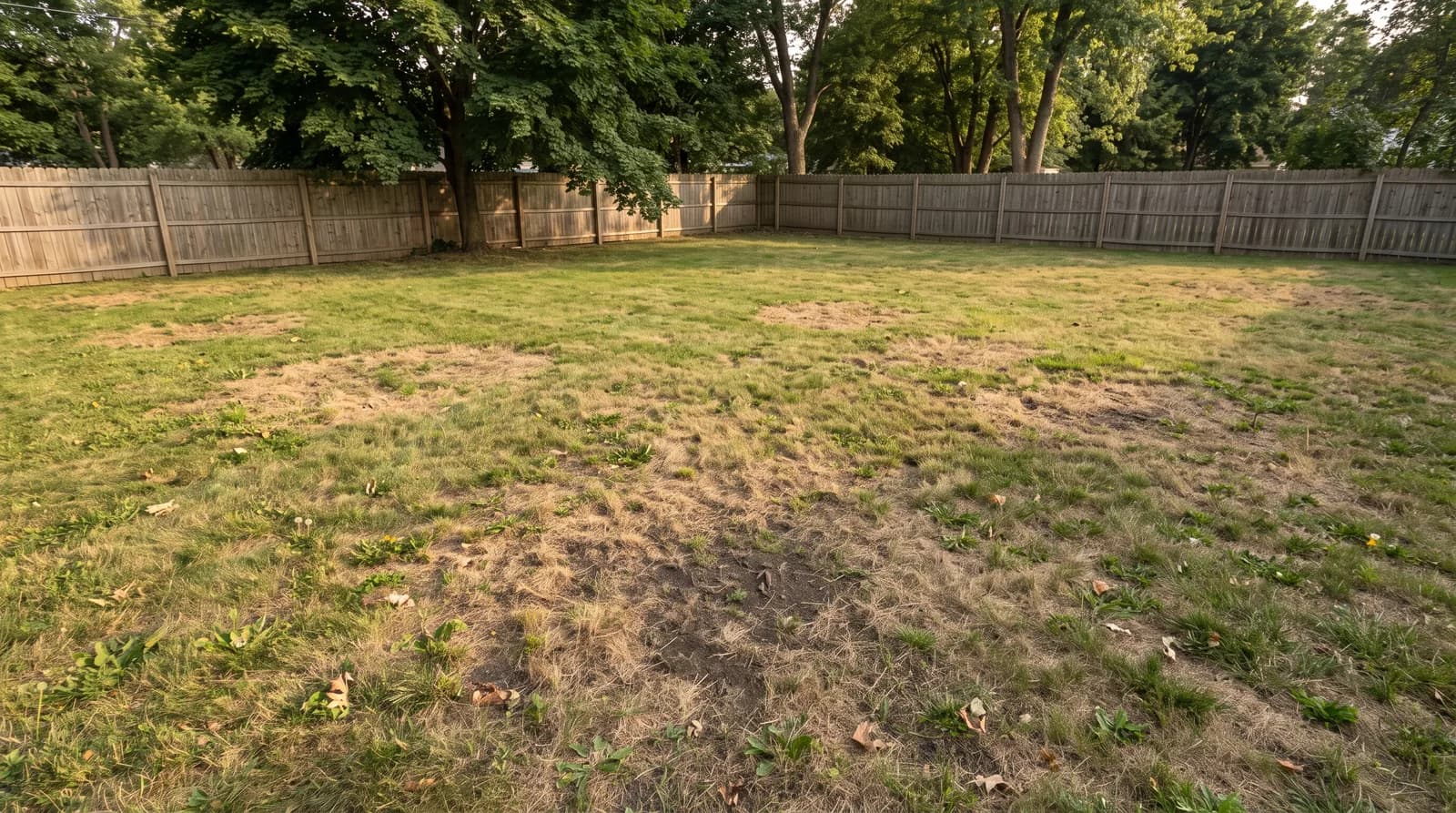
Here's one client's lawn, before and after our aeration and overseeding:
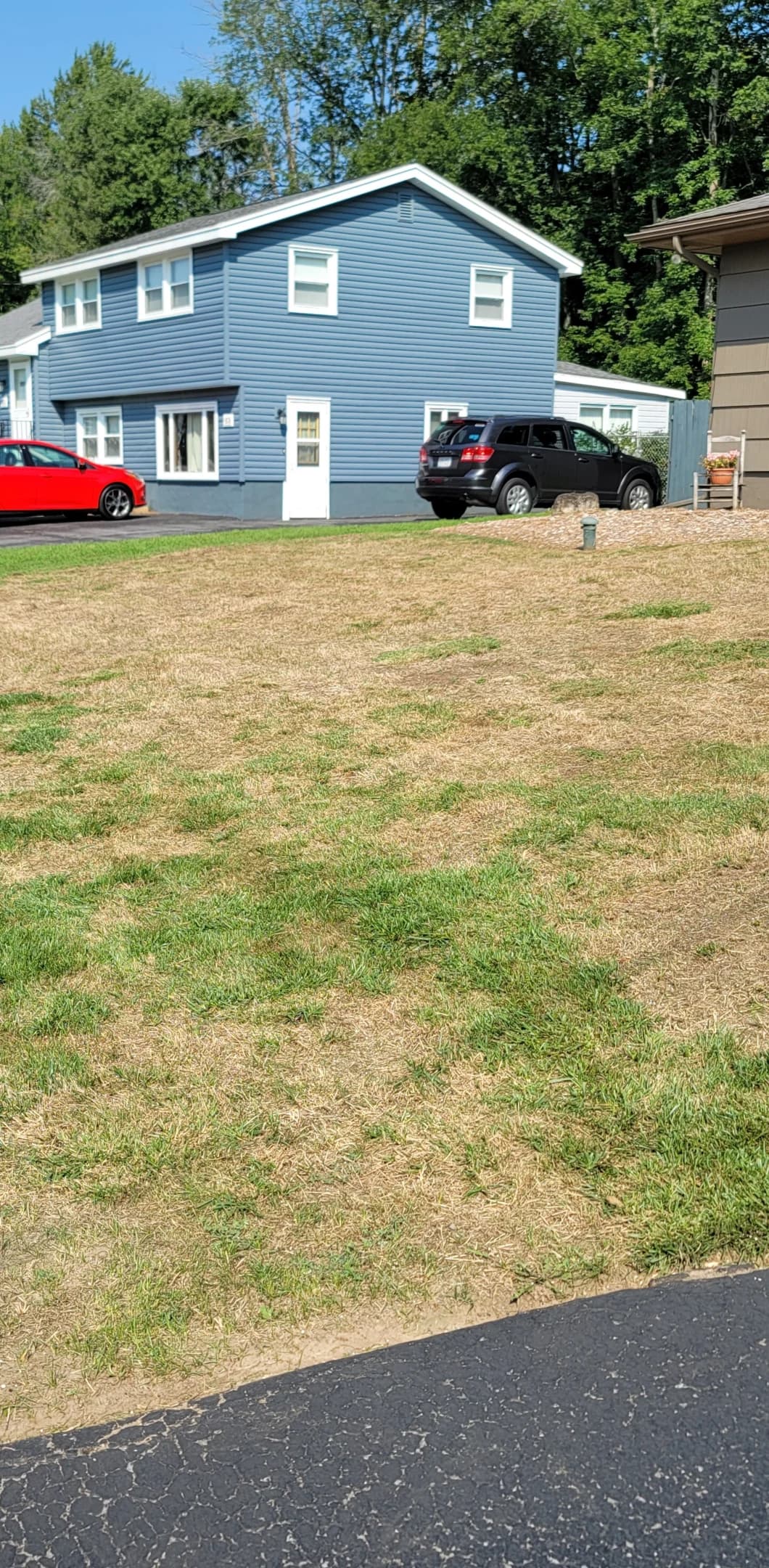
Before
Thin, dry and straw-colored.
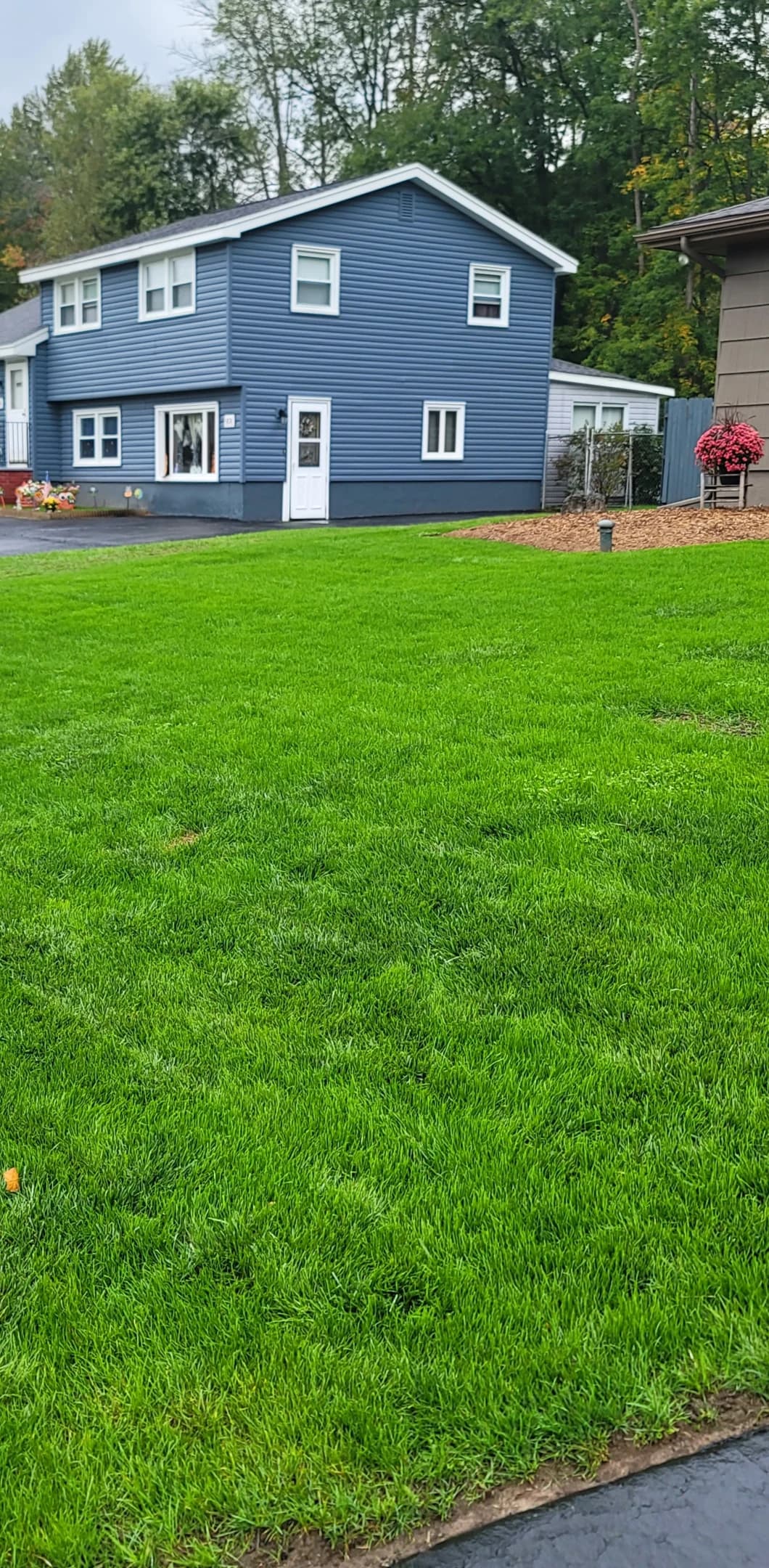
After
The same lawn after our aeration and overseeding.
A Central New York lawn year
| When | Your lawn | Happy Habitat |
|---|---|---|
| Early spring | New York allows no lawn fertilizer before April 1. Snow mold and salt damage show as the snow melts. | Slow-release feeding with crabgrass prevention. |
| Late spring and June | The grass grows fast. Grubs feed on the roots again, then turn into beetles. | Early summer feeding, and grub prevention before grubs do their damage. |
| July and August | Heat and dry spells can turn the lawn dormant, chinch bugs are most active, and beetles lay the eggs of the next generation of grubs. | Summer feeding, and Lawn Pest Defense on the lawn's surface. |
| Mid-August through September | The best window to aerate and seed. Young grubs start feeding on the roots. | Core aeration and overseeding, and the late summer feeding. |
| October and November | Grubs feed into November, then move deeper for winter. The first frost comes around October 19 in a typical year, and leaves left on the lawn can smother the grass over winter. | A final feeding (some call it a winterizer), with weeds treated if needed. Fall leaf cleanup once most leaves are down. |
| December to March | No lawn fertilizer in New York from December 1 to April 1, and snow mold can develop under the snow. |