
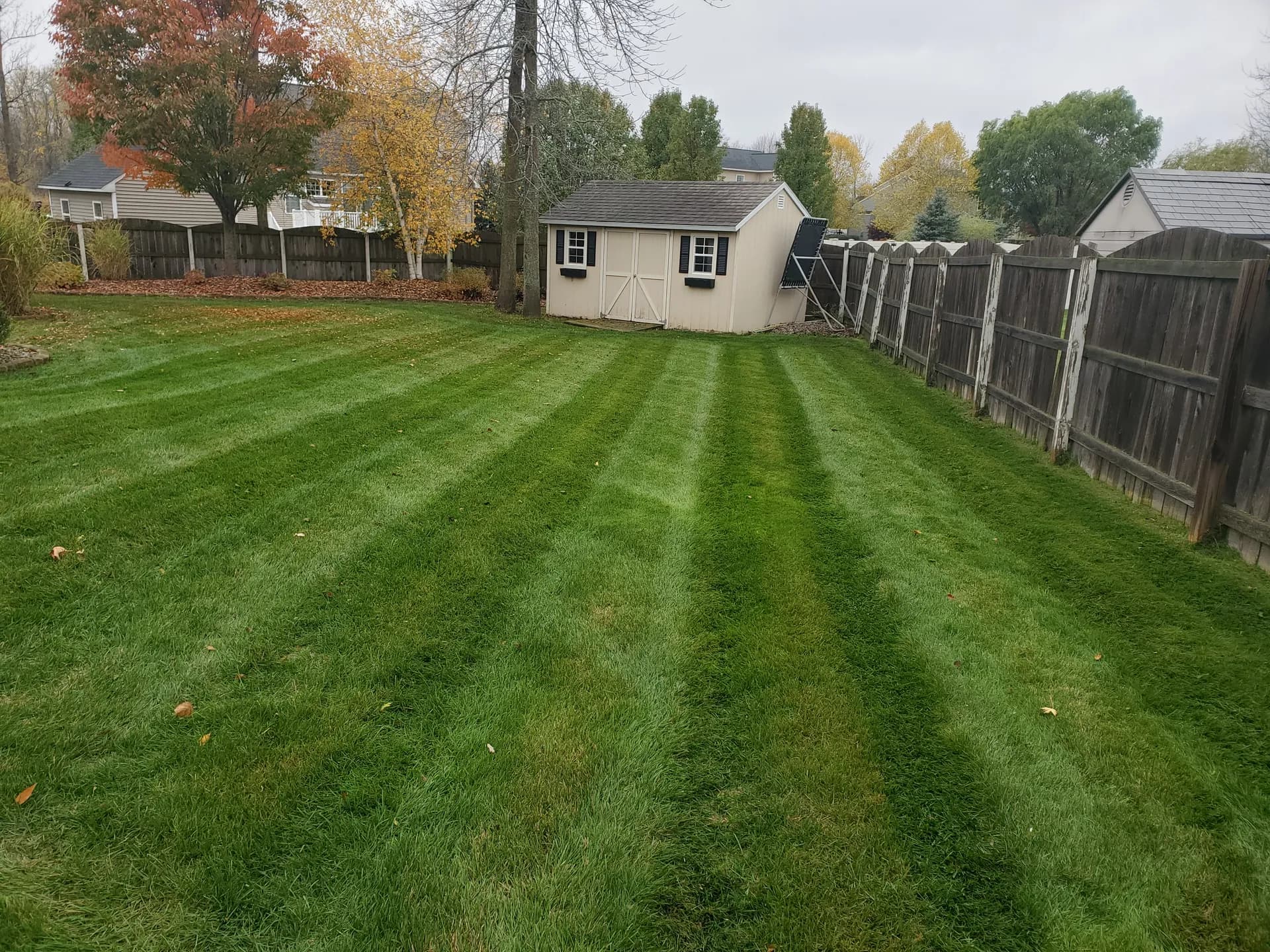
Every spring around Syracuse, the lawn greens up and so do the dandelions. By midsummer, crabgrass is spreading along the driveway and clover has filled the thin spots. Weeds aren't bad luck. They move into grass that's thin, cut short or hungry, and each one has its own moment in the season. Here's how to tell what you've got, why it's there, and when to act in a Central New York lawn.
Which weed is it?
Knowing the weed tells you when to act. These are the usual suspects in Central New York lawns:
- Crabgrass. A grass, not a broadleaf weed. It's lighter green and coarser than your lawn, grows low and spreading where you mow, and large crabgrass has stiff hairs that stand straight out from the stem. It's an annual: it sprouts from spring well into summer and dies with the first killing frost, but each plant leaves thousands of seeds that can last more than three years in the soil.
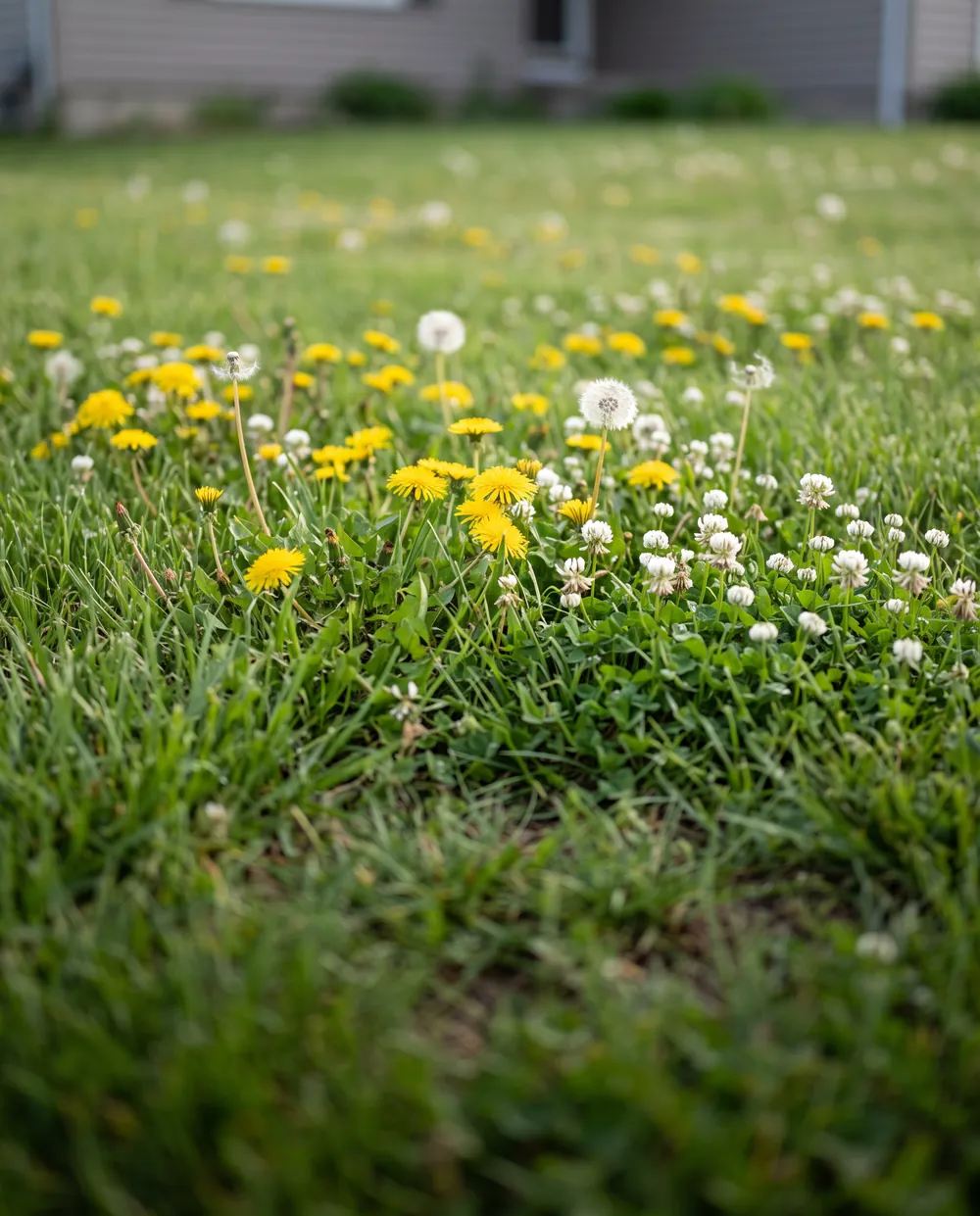
- Dandelion. A rosette of long, lobed leaves and yellow flowers, in spring and again in fall. It spreads mainly by windblown seed, and can occasionally regrow from a broken piece of its taproot.
- White clover. White flower heads on creeping stems that root as they go and form mats. It's common where soil is acidic, low in fertility or compacted, and it handles close mowing.
- Broadleaf plantain. A low rosette of broad, rounded leaves with green flowers. It thrives in compacted soil with lots of foot traffic.
- Ground ivy (creeping Charlie). A mint-family creeper with round, toothed leaves and small purple flowers. Its stems root at every node and form dense patches, mostly in rich, damp shade.
- Wild violet. A low-growing perennial that spreads by seed and short underground stems, and prefers moist, cool, shady spots.
Not sure? Cornell's Turfgrass and Landscape Weed ID site walks you through it by the plant's traits, with photos of each weed.
Why weeds show up in Central New York lawns
Weeds are opportunists. Cornell's advice for crabgrass and broadleaf weeds alike starts in the same place: find what's thinning the grass, because weeds fill the gaps.
Thin spots and scalped edges
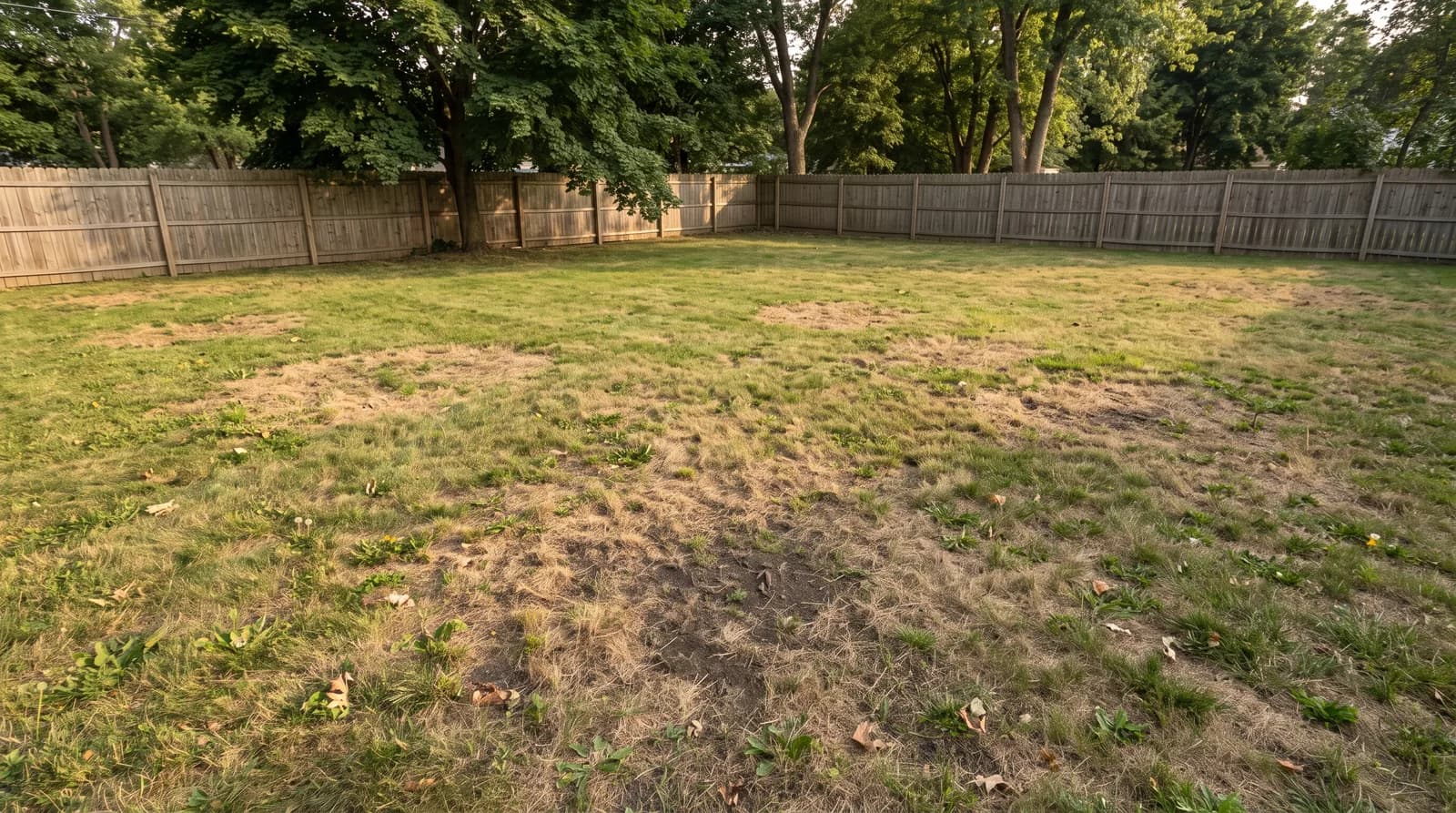
Crabgrass is often found along walks and driveways, where edging or scalping with a string trimmer exposes soil and thins the turf. Bare spots left by winter, plows or pets are open ground for weed seed. Onondaga County's extension office puts it simply: keep weeds out, patch bare spots. If your lawn is thin all over, our guide to thin, patchy or brown lawns walks through the causes.
Mowing too short
Cornell's upstate lawn guide notes that lawns mowed too short let more weed seed sprout, and Rutgers research shows mowing at the highest recommended height can significantly cut crabgrass.
Hard, packed soil and road salt
Plantain thrives in compacted, well-trodden soil, and knotweed, one of the first summer weeds up in spring, shows up on hard, trampled ground and where road salt builds up. If a screwdriver won't go into your soil easily, it's time for core aeration.
Hungry or acidic soil
Clover is common in acidic, low-fertility soil, and red sorrel likes acid, poorly drained soil low in nitrogen. As Cornell's upstate lawn guide puts it, research has shown consistently that a balanced fertilizer program and proper mowing help grass out-compete weeds.
Shade
Ground ivy and violets are shade lovers, and they're toughest in shaded lawns. Cornell suggests a more competitive seed mix for shady spots, such as fine fescues, to help the grass hold its own there.
A dry summer
When a dry spell sends the lawn into summer dormancy, weeds move in.
Crabgrass: when to act
Crabgrass is stopped before it sprouts. A crabgrass preventer sets up a barrier in the soil that crabgrass seedlings can't survive, and most preventers won't control crabgrass once it's up. That's why the preventer goes down early in the spring, as Jim Barrett explains in Crabgrass Prevention vs. Seeding.
Watch the forsythia
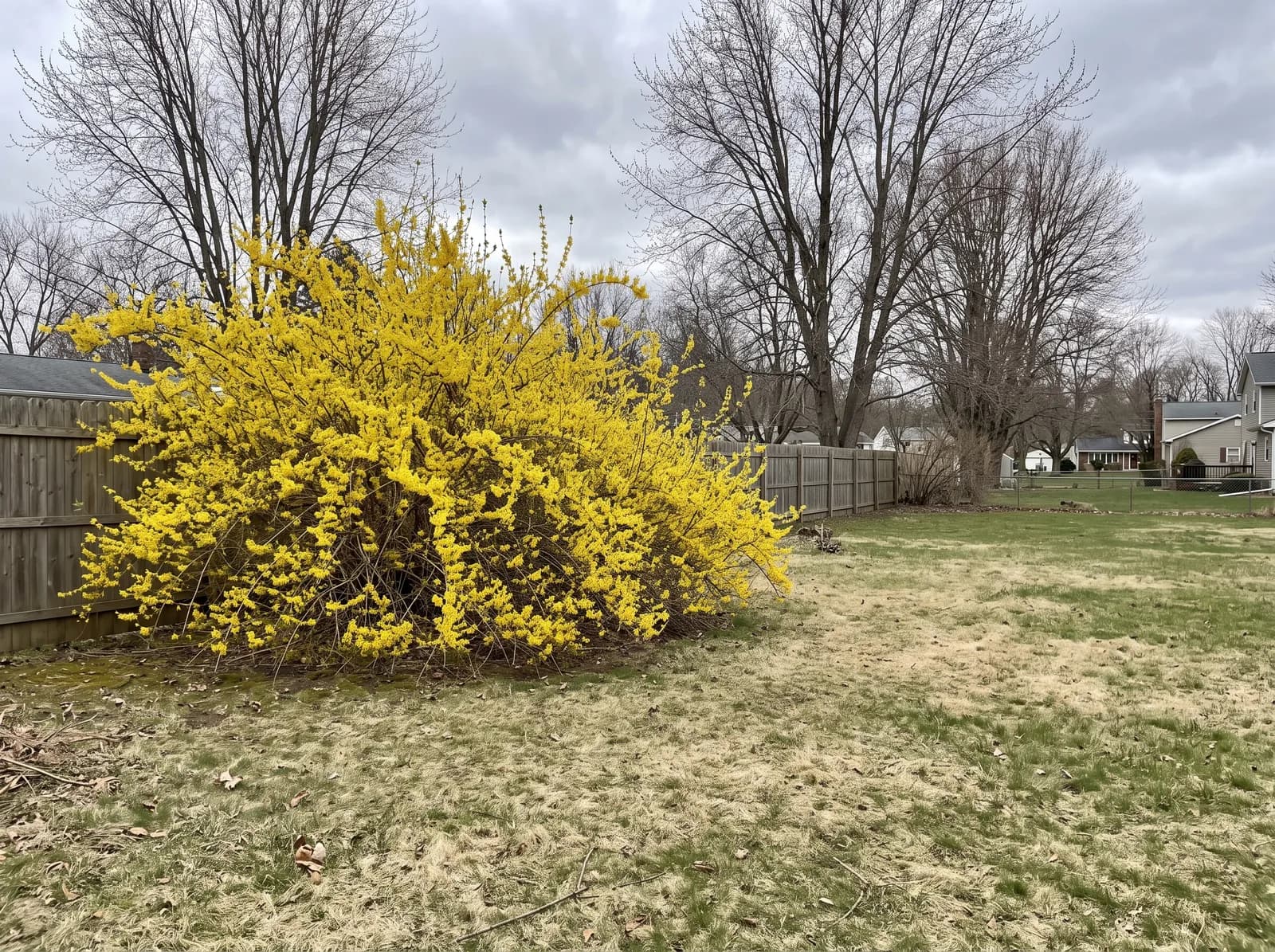
You don't need a soil thermometer. Crabgrass starts sprouting as the soil warms toward 60 F, and the preventer has to be in place before that. The cue Cornell Cooperative Extension and Rutgers both use is forsythia, the shrub that lights up yards in yellow each spring: Rutgers says to put the preventer down as soon as forsythia is in full bloom, and Cornell by the time its flowers are just starting to fade.
Around Syracuse
The average temperature at Syracuse's airport climbs from 46.3 F in April to 58.2 F in May, and Cornell's upstate lawn guide puts crabgrass control in April, before May 1. Early spring it is, and that's when our crabgrass prevention goes down.
Leave the barrier alone
Raking, aerating or dethatching after the preventer is down can break the barrier, so save core aeration for late summer and fall, its best season anyway.
Seeding in spring?
Grass seed can still germinate, but the preventer keeps the new grass from establishing, so the two can't be done together. Jim covers how to time the two, and how to repair plow damage in spring, in Crabgrass Prevention vs. Seeding.
Crabgrass already up?
A preventer works before crabgrass sprouts, not after, which is why our lawn program puts it down early in the spring. If crabgrass breaks through on a lawn that got it, we treat those spots. Starting mid-season with crabgrass already in? We may spot-treat patches here and there, and next spring's preventer is the real fix. Meanwhile, pull small plants before they set seed, since stopping crabgrass before it seeds can reduce next year's sprouts.
Dandelions, clover and other broadleaf weeds
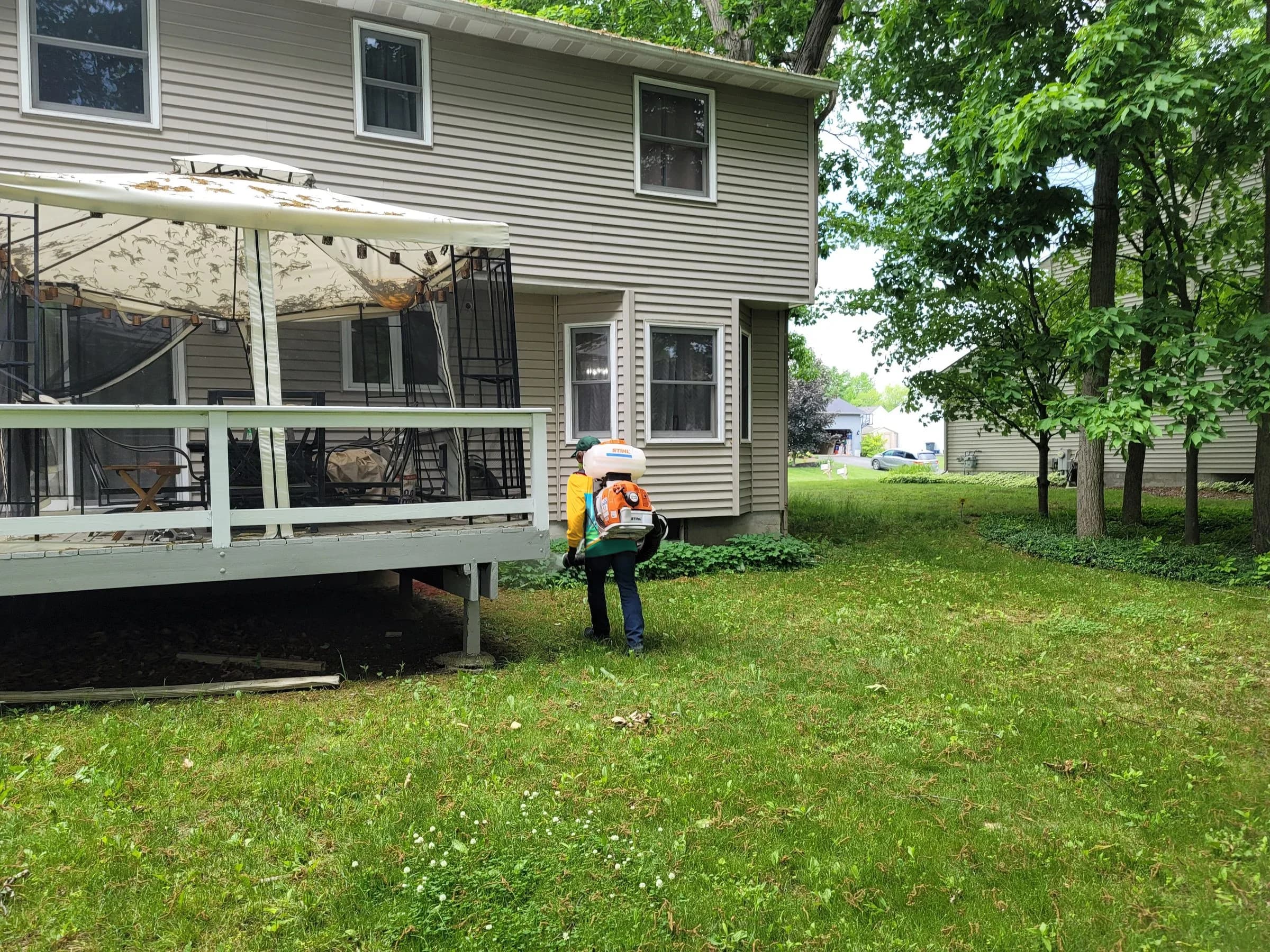
Broadleaf weeds are a different job. They're treated once they're up and actively growing, with a selective control that leaves the grass alone. Jim explains pre-emergent, post-emergent and selective weed control in Weed Control and Fertilizer.
Spring and fall
Broadleaf weeds can be treated in spring or fall, and fall is a strong time: Cornell's upstate lawn guide points to September, and Jim calls fall the best time for weed control in The Best Time to Start Lawn Care.
Why they keep coming
New dandelions come up from late spring to early fall, most of them in early summer, which is why our broadleaf weed control treats them as they show up through the season, not just once.
The tough ones
Wild violet and ground ivy are exceptionally hard to control in shaded lawns. They take repeat treatment, and some weeds can only be treated at certain times of the season. Thickening the grass in the shade helps it compete.
Pulling a few?
Get the whole root, since many perennial weeds regrow from what's left underground, and pull after a soaking rain, when they come out easier. Then reseed the bare spot. For more than a few, though, hand pulling isn't practical, as Jim's lawn care guide puts it.
Build a lawn weeds can't use
- Mow high. Mow at 3 inches or higher; Jim's lawn care guide suggests about 4 inches in summer. Never cut more than a third of the blade at once, and keep the blades sharp. The higher the mowing height, the deeper the roots.
- Water deep, not often. About an inch a week, from rain plus the hose, in longer soaks rather than a little every day. Frequent light watering keeps the soil surface moist, which helps weed seedlings survive.
- Fill thin spots in late summer. Cornell's upstate guide puts seeding from August 15 to September 15, and Jim calls September the ideal time to seed in Central New York. Overseeding fills bare patches and reduces crabgrass, and core aeration first gives new seed the seed-to-soil contact it needs to germinate: some falls into the holes, and the cores breaking up on the surface cover more of it.
- Mind your soil's pH. Cornell recommends keeping soil pH between 6.0 and 7.0, where nutrients are more available to the grass. For acidic soil, our Calcium and Lime Soil Treatment is one of our lawn extras.
- Feed on time. New York doesn't allow lawn fertilizer with nitrogen, phosphorus or potassium from December 1 to April 1, and phosphorus only when a soil test calls for it or the lawn is new.
A year of weeds in a Central New York lawn
| When | Weeds | Happy Habitat |
|---|---|---|
| Early spring | The lawn wakes up. Rake out winter debris and watch the forsythia: crabgrass sprouts as the soil warms toward 60 F. Lawn fertilizer is allowed again from April 1. | Slow-release feeding with crabgrass prevention. |
| Late spring and early summer | Dandelions and clover flush, and most new dandelion seedlings come up in early summer. Crabgrass may have sprouted, but it usually isn't showing yet. Start mowing high. | Slow-release feeding, with broadleaf weeds treated. |
| Summer | Crabgrass grows fast in the heat. Dry spells send lawns dormant, and weeds move in. Mow high and water deep. | Feeding continues, with weeds treated as needed. |
| Late August and September | Cornell's window to seed, August 15 to September 15, and its pick for dandelions and clover. | Feeding, with weeds treated as needed, and the time to aerate and overseed. We seed through September, usually starting after Labor Day. |
| October and November | Crabgrass dies with the first hard frost, leaving its seed behind for spring. The first freeze comes around October 19 in a typical year. | A final feeding (some call it a winterizer), with weeds treated if needed. |
| December to March | The lawn rests. New York allows no lawn fertilizer from December 1 to April 1. |
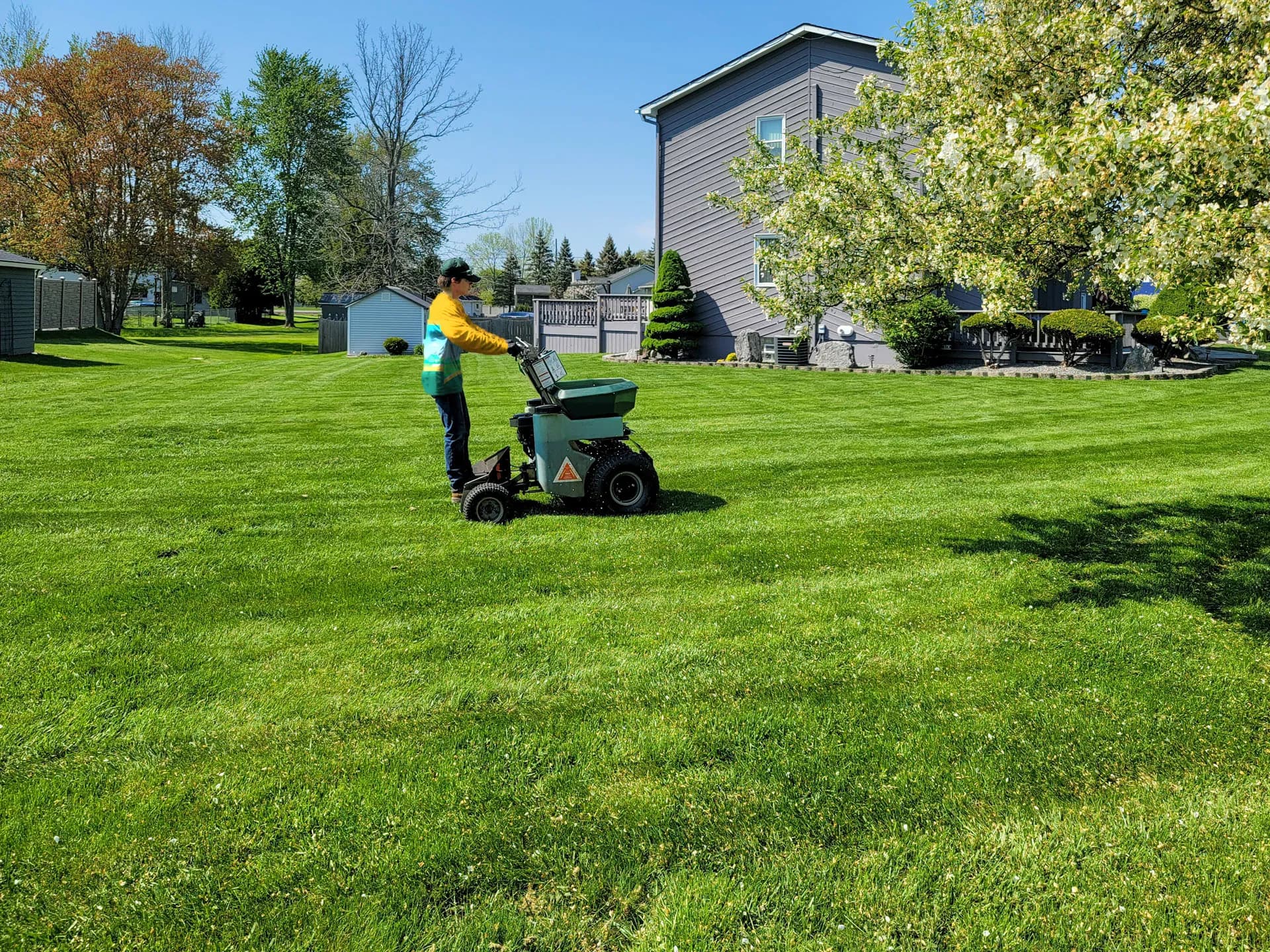
That right-hand column is our full-season lawn program: slow-release granular feeding through the season, crabgrass prevention in spring and broadleaf weeds treated as they show up, timed to how Central New York lawns grow.