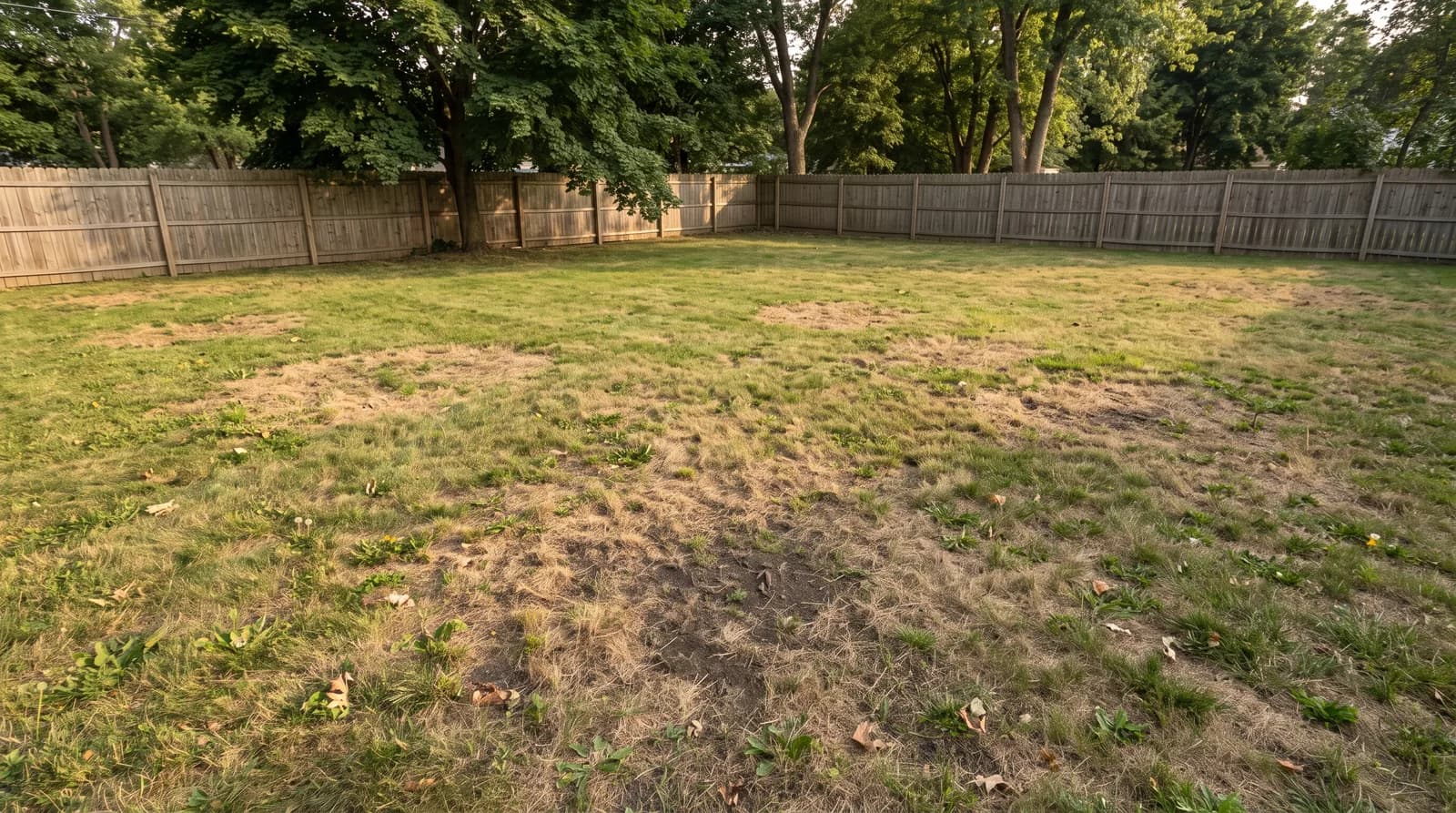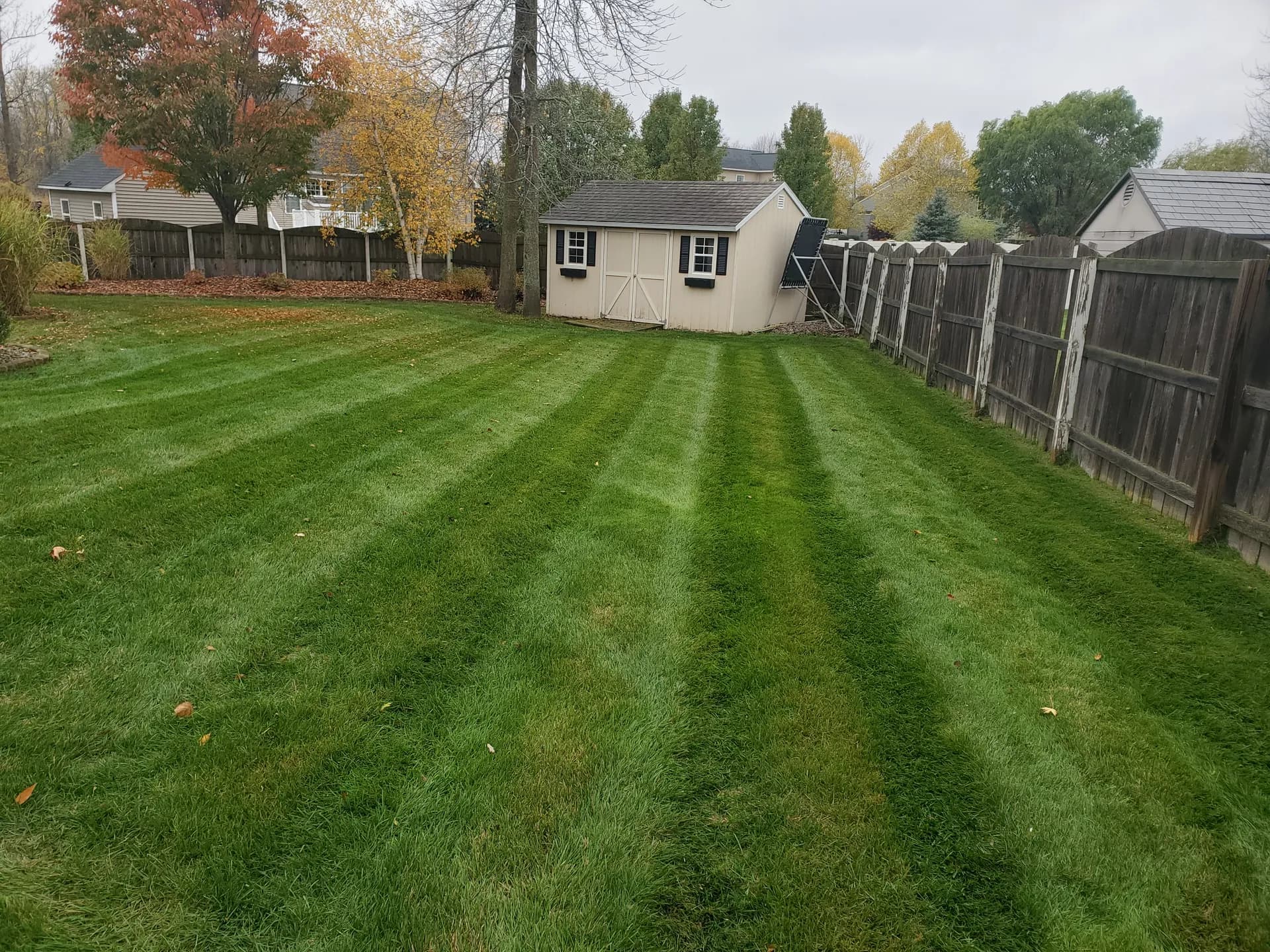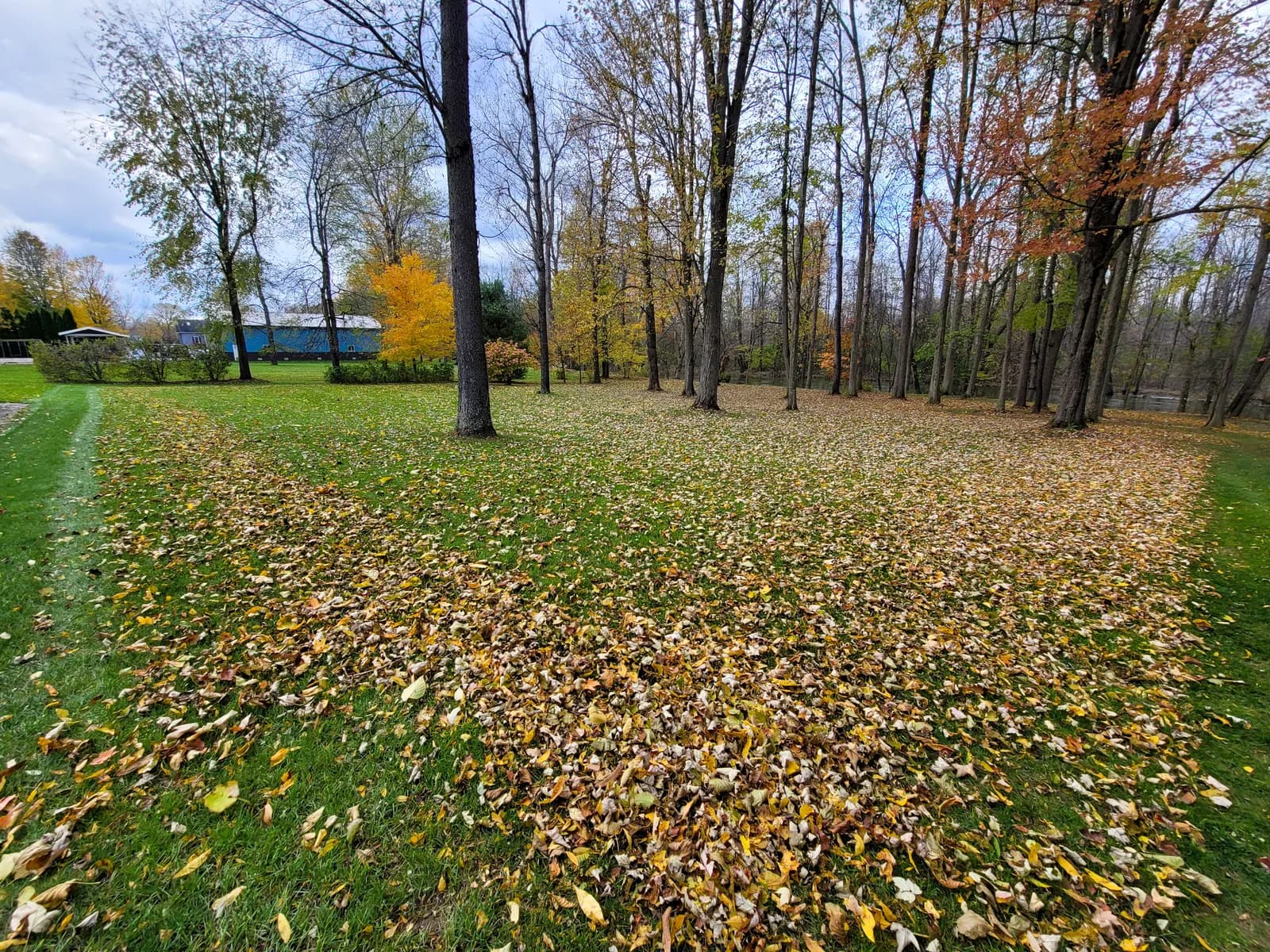

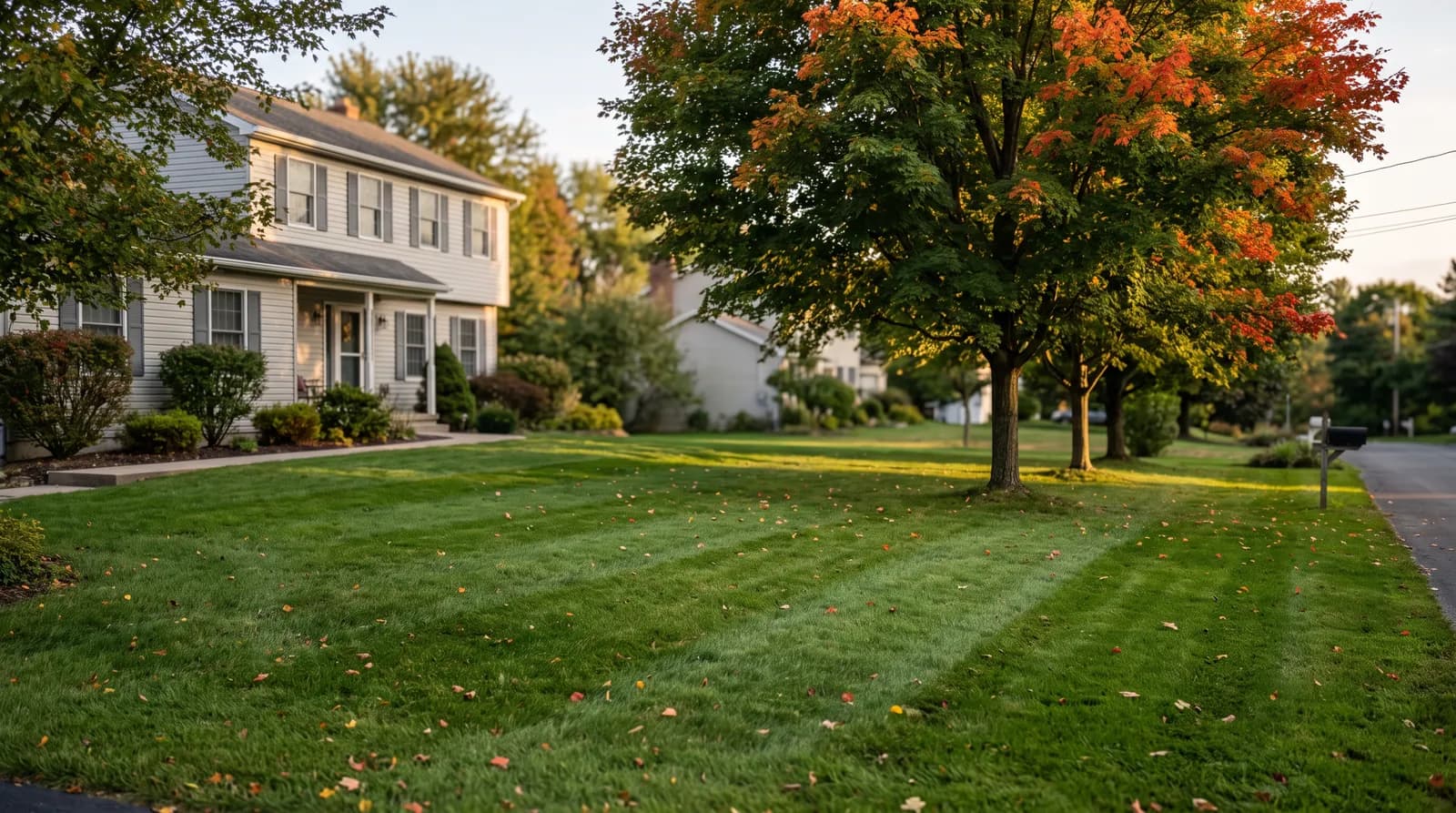
Our Calcium and Lime Soil Treatment is one of the extras you can add to our lawn program, right beside aeration and overseeding. It doesn't feed the grass or kill weeds, so it's easy to skip. But on acidic soil, it's what helps the rest of your lawn care pay off. Here's what calcium lime is, what our treatment does, the signs your lawn may need it, and why fall is the time to put it down.
What calcium lime is
Lime for lawns is limestone, mined and ground fine. Cornell sorts it by magnesium: limestone with little magnesium is calcitic lime, and limestone with more is dolomitic. Calcium lime is calcitic: mostly calcium carbonate, and it supplies calcium, an essential element for plant growth.
It isn't fertilizer, and it isn't weed control. It's a soil amendment: it changes the soil your grass grows in, so the grass can make better use of everything else it gets.
The lime we use: CALplus
CALplus is a professional-grade granular calcium and limestone soil treatment designed to help reduce soil acidity and move soil pH toward a more favorable range. It also supplies calcium, helps improve nutrient availability, and creates better soil conditions for healthy turf growth. By improving the soil environment, CALplus can help your lawn make better use of nutrients from your regular fertilizer program. This service is typically applied in the fall.
It's a high-calcium, low-magnesium limestone, enhanced with an organic acid so its calcium becomes available quickly and it gets to work on soil pH sooner.
What lime does for your lawn
pH, in plain words
Soil pH measures how acidic the soil is. Below 7 is acidic, above 7 is alkaline, and each step on the scale is ten times the one before it: soil at pH 5 is ten times more acidic than soil at pH 6, and a hundred times more acidic than soil at pH 7.
Cornell's advice for lawns is to keep soil pH between 6.0 and 7.0. In that range, plant nutrients are more available, and the helpful microbes in the soil are more active.
What acidic soil does to grass
- Nutrients get locked up. As soil turns more acidic, nutrients like phosphorus become less available to the grass, while aluminum becomes more available and can build to levels that harm it. Strongly acidic soil, at pH 5.5 or below, can leave a lawn short of calcium, magnesium or phosphorus.
- Roots and soil life slow down. Low pH can mean poorer root growth and more thatch, and fewer of the soil microbes that break down thatch and release nitrogen from some fertilizers.
- Feeding and treatments lose their punch. Extra fertilizer can't fix a problem caused by low pH, Cornell notes, and strongly acidic soil can make some lawn weed and insect controls less effective.
What lime changes
Lime works on the cause. When calcium carbonate goes into the soil, its calcium takes the place of the acidic hydrogen and aluminum held on soil particles, and the carbonate neutralizes them. The pH rises toward the range grass likes, nutrients come back within reach of the roots, and calcium lime adds calcium along the way.
What our Calcium and Lime Soil Treatment does
It works on the ground beneath your grass, not the grass itself. It's a calcium soil amendment that raises the pH of acidic soil, so the soil becomes a better place for roots to grow. That's why it pairs with your feeding program: it corrects the acidity that fertilizer alone can't fix. On a lawn held back by acidic soil, it can help in six ways:
- It corrects acidic soil, moving the pH toward the range lawn grass grows best in.
- It makes nutrients more available, helping the grass reach what's already in the soil and what your fertilizer supplies.
- It supports root growth, easing the harsh conditions that can hold roots back in strongly acidic soil.
- It supplies calcium, an essential nutrient for grass.
- It supports helpful soil life, the microbes that break down thatch and recycle nutrients, which are more active at a suitable pH.
- It helps the rest of your lawn care pay off. With acidity out of the way, your lawn can respond better to its feeding and care.
Put simply, it supports healthy root development, improves fertilizer effectiveness, and promotes stronger, thicker, healthier grass over time.
Why Central New York lawns drift acidic
- Rain does it slowly. In a humid climate like New York's, rain washes calcium and magnesium out of the soil over time, leaving it more acidic.
- Feeding speeds it along. Most nitrogen fertilizers form acid as they break down in the soil, so a lawn that's fed every year drifts acidic faster. That's no reason to stop feeding. It's why lime and a feeding program go together.
Signs your lawn may need lime
Acidic soil doesn't announce itself, but a lawn can drop hints:
- Thin, pale grass that doesn't respond to feeding the way it should.
- Moss moving in: it's more common on moderately to strongly acidic soil.
- White clover spreading: it's common in lawns with acidic, low-fertility or compacted soil.
- Shepherd's purse, a lawn weed that points to moderately to strongly acidic soil.
- Thatch building up.
Some of these can have other causes too, and our guides to a thin, patchy or brown lawn and to weeds and crabgrass cover them. Seeing a few? Add our Calcium and Lime Soil Treatment when you ask for your estimate, alongside your lawn program.
Calcium lime or dolomitic lime?
Both are ground limestone, and both raise soil pH. The difference is magnesium: calcium lime is mostly calcium carbonate, while dolomitic lime carries both calcium and magnesium carbonates. Ours is calcium lime: CALplus is a high-calcium, low-magnesium limestone, so it raises the pH and adds calcium.
When to lime: fall
Lime can go down any time of year, but fall is when it does the most good. Penn State Extension calls fall the most effective time: winter's rain, snow, freezing and thawing help work the lime into the soil. UNH Extension's advice matches: lime in the fall, so it starts raising the pH over the winter, in time for next season's growth.
Ground limestone works slowly. It can take anywhere from 6 to 18 months to change soil pH, depending on conditions, so the sooner it's down, the sooner it's working. CALplus is enhanced to get to work sooner, and fall still gives it the most time to react before spring. Think of it as an investment in your soil and next season's lawn, not an instant green-up.
In our lawn program, the fall visit is a final feeding (some call it a winterizer), with weeds treated if needed. Fall is also an ideal time for our Calcium and Lime Soil Treatment, allowing the treatment to work into the soil before spring growth begins.