
Brown patches that won't green up in late summer. Turf that lifts like a loose piece of carpet. Skunks tearing up the yard overnight. Something is feeding on your lawn, either below the soil or on top of it, and each needs its own treatment. Here's how to tell which insect you're dealing with, when each one does its damage around Syracuse, and what treats what.
What treats what, at a glance
Lawn insects live in layers: below the soil, on the lawn's surface, and in the shrubs and shade around it. Each layer has its own treatment.
| Pest | Where it lives | What treats it |
|---|---|---|
| White grubs | Below the soil, eating the grass roots. | Grub prevention |
| Chinch bugs | On the surface, in the thatch of sunny lawns. | Lawn Pest Defense |
| Sod webworms | On the surface, in silk-lined tunnels in the thatch. | Lawn Pest Defense |
| Crane fly larvae | The top inch or so of soil, coming up to feed on the grass. | Lawn Pest Defense |
| Ants in the lawn | Nests and small mounds in the lawn. | Lawn Pest Defense |
| Fleas | Shady, damp spots where pets and wildlife rest. | Lawn Pest Defense |
| Mosquitoes and ticks in the shade | Trees, shrubs, wood lines and shady spots around the house. | Mosquito and tick control |
| A heavy flea and tick area | Everything from about chest height down: lawn, garden beds, mulch, shrubs, wood lines, stone walls and the house perimeter. | The one-time flea and tick knockdown |
| Ants at the house | The foundation, eaves and entry points. | Exterior pest control |
On the lawn itself, it comes down to two services. Grub prevention works below the soil, where grubs feed on the roots. Lawn Pest Defense treats the lawn's surface, for insects that live on top of the soil, not grubs underneath. That's why each one is its own service. See how grub prevention and Lawn Pest Defense work.
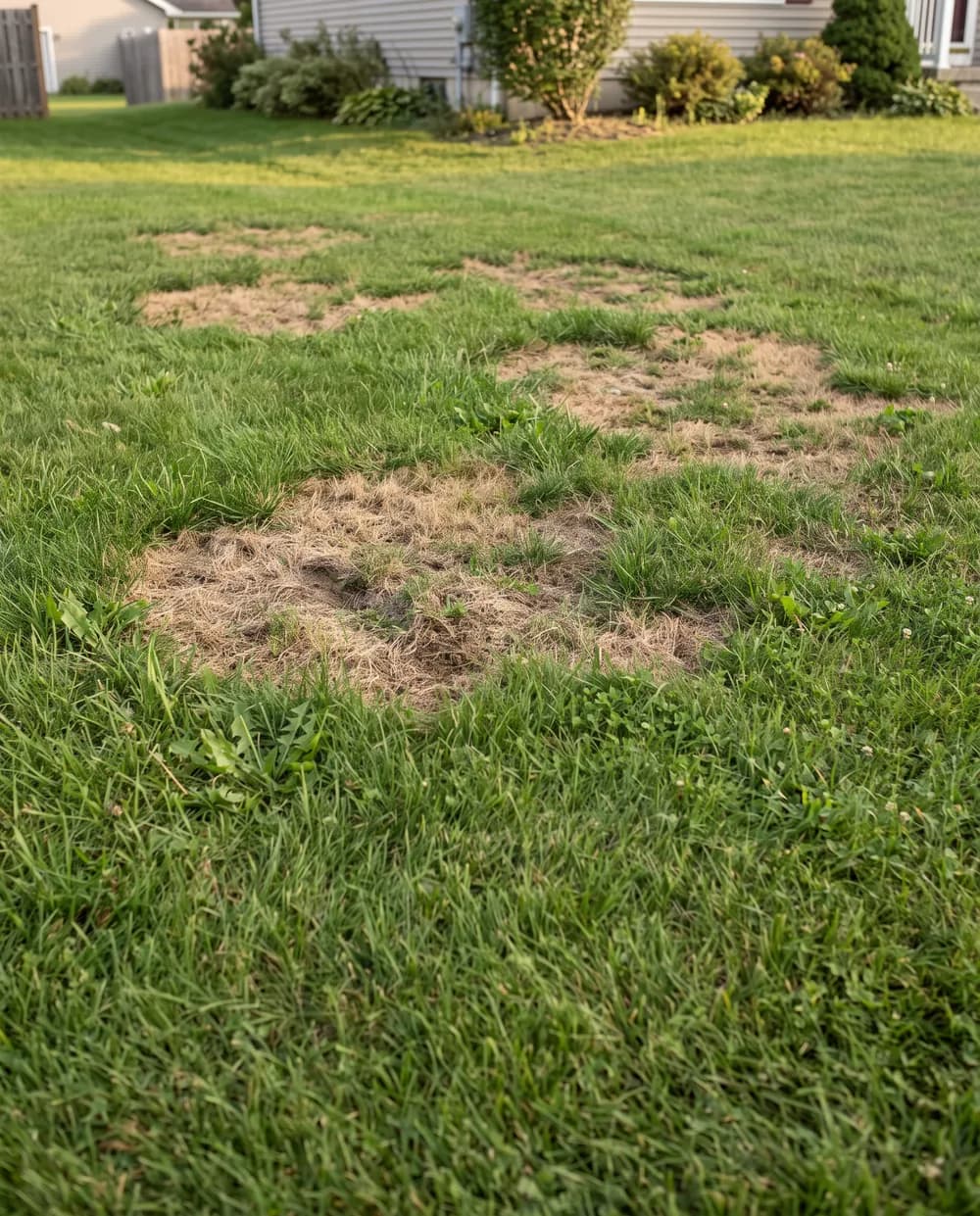
Below the soil
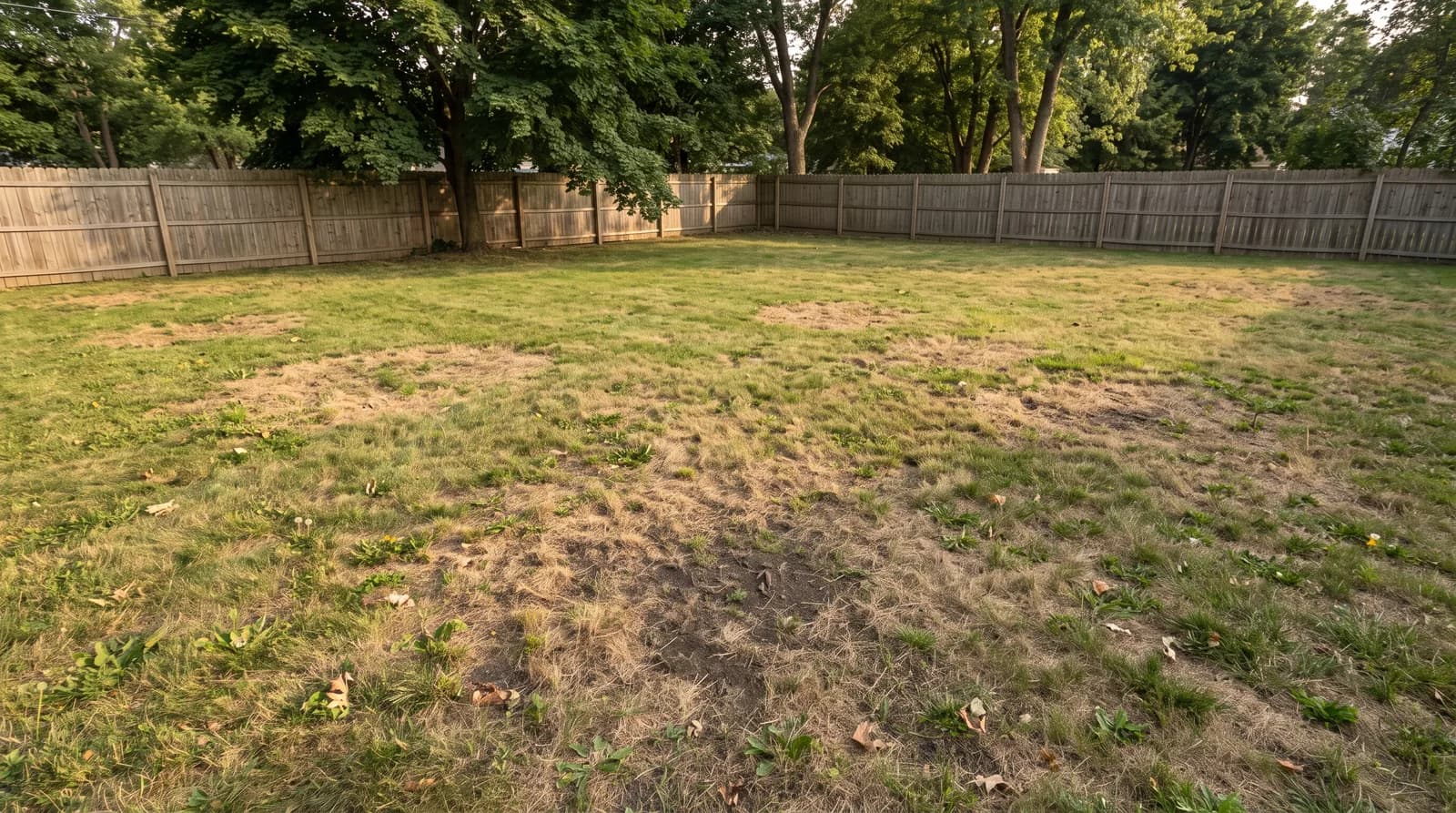
Brown patches that won't green up can mean grubs are eating the roots.
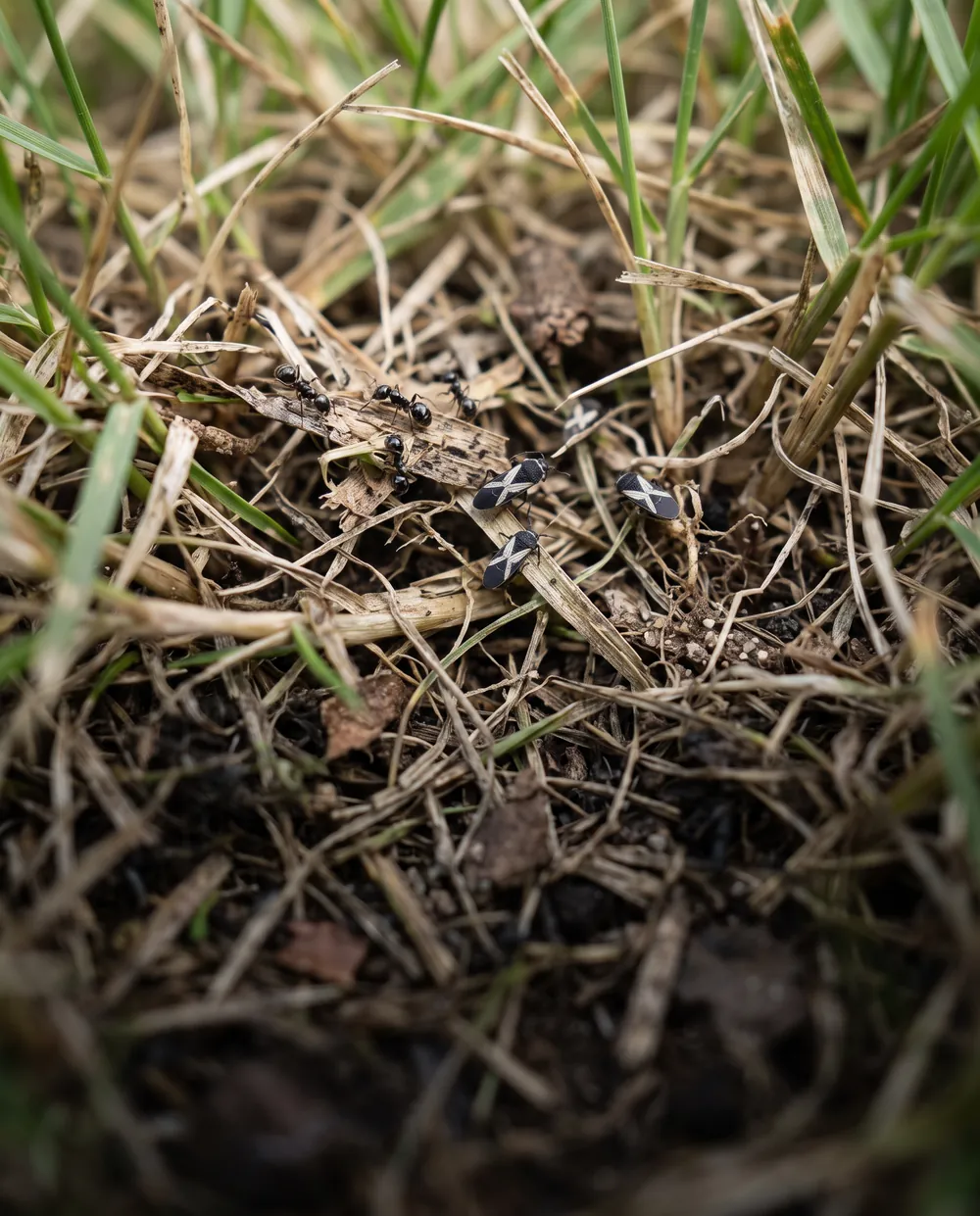
On the surface
Chinch bugs and ants live up in the thatch, at the base of the grass.
Below the soil: white grubs
Which grubs live in Central New York lawns
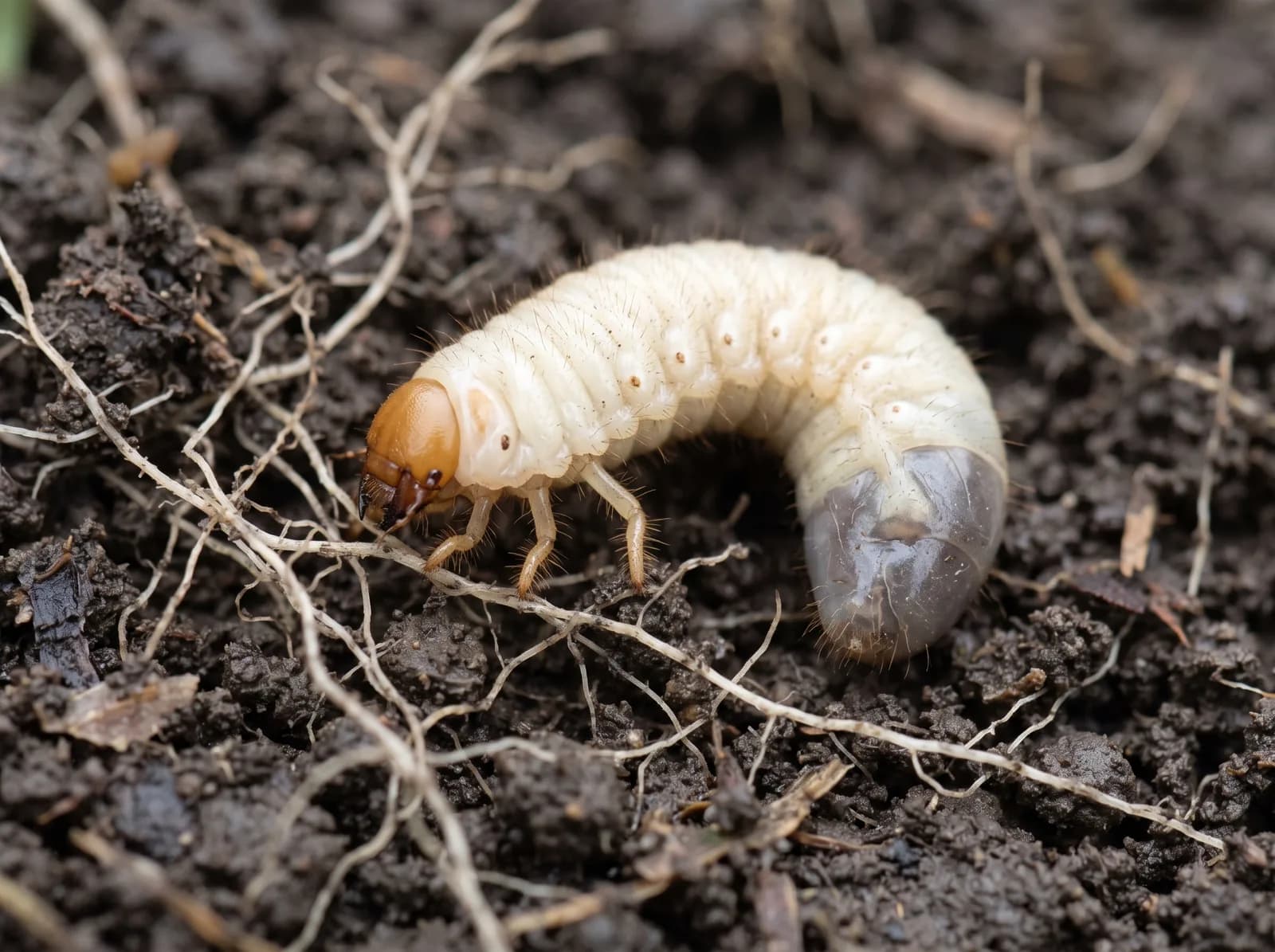
A white grub is the young, or larva, of a scarab beetle. It's C-shaped and creamy white, with six legs and a distinct head, and a Japanese beetle grub grows to about an inch long. The major grubs that affect lawns here include the Japanese beetle and the European chafer, and they can quickly destroy a beautiful lawn if left untreated. Around Syracuse, grubs are a familiar problem, especially in the north and east suburbs.
Cornell counts eight kinds of white grubs in New York, and the state's integrated pest management program names the European chafer, the Japanese beetle and the Oriental beetle as the most common in home lawns. The European chafer is an old New York story: it was first found in Newark, in Wayne County, in 1940, and has since spread to many areas of the state.
A grub's year around Syracuse
Most New York grubs take a year to go from egg to beetle, and Cornell calls the Japanese beetle's calendar typical of most grubs here:
| When | Grubs | Happy Habitat |
|---|---|---|
| Early summer | Japanese beetles come out of the ground in late June and early July to feed and mate. They can fly as far as a mile, and their favorites include roses, grapes and linden trees. | Grub prevention goes down, before the eggs hatch. |
| July | Females lay eggs in the soil, and the eggs hatch about two weeks later. | |
| August | Young grubs feed on roots close to the surface, still small and out of sight. | |
| Late August to October | Grubs grow and eat more roots. Damaged turf often appears now, and skunks, raccoons and crows dig for them. | Early fall is the time to aerate and overseed thin, damaged areas. |
| Late fall and winter | As the soil cools, grubs move down below the frost line. The first freeze around Syracuse comes about October 19 in a typical year. | |
| Spring | Grubs move back up to feed for a short time, then pupate and come out as beetles in early summer. Most lawn damage seen in spring comes from feeding the fall before. |
What grub damage looks like
Grubs feed on the root system of your turf, and the damage can be quick and devastating. They stay out of sight, so most people notice them only when dead, damaged areas appear. Look for:
- Turf that feels spongy underfoot.
- Large, irregular brown sections that peel back from the soil like a carpet, because the roots have been chewed away.
- Thin, stressed grass that handles dry spells poorly and lets weeds move in.
- Damage in low, moist spots, which grubs prefer.
- Skunks, raccoons, crows or moles digging. They're after the grubs, and Cornell notes their digging is often more troublesome than the grubs' own damage.
See for yourself: the peel-back check
Want to know what's under there? Cornell's shovel check takes a few minutes:
- With a garden shovel or spade, cut three sides of a 12-inch square of turf.
- Grab the open edges and peel the turf back like a carpet, toward the side that's still attached.
- Look for C-shaped grubs in the exposed soil and under the sod.
- Lay the sod back down and water it well.
Mid-August is Cornell's time to look in upstate New York, while the grubs are still small. Salt or soapy water won't bring grubs to the surface, so you have to dig. Found grubs, or damage that looks like them? Tell us what you're seeing when you ask for your estimate.
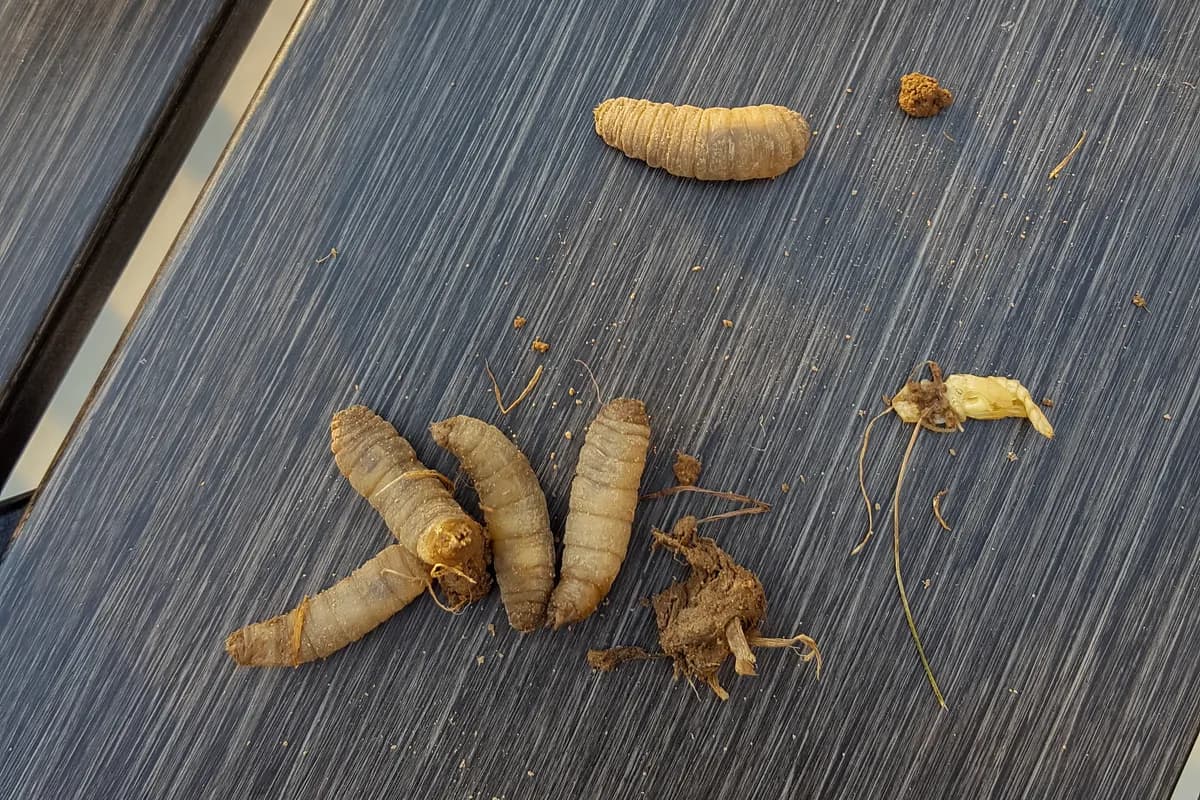
Why prevention comes before the damage
By the time a lawn turns brown and peels up, the grubs have already eaten the roots, and most of the damage you see in spring comes from grubs feeding the fall before. The calendar works against waiting, too. Cornell's window for preventive grub control runs from May to July, before the eggs hatch. By September it's too late for most products, and by October it's really too late to treat that year's grubs. Curative treatments exist, but by then the damage is done.
Prevention also goes after what the skunks and raccoons are digging for: Cornell's turfgrass program calls managing grubs the best management strategy for grub-feeding animals.
That's why our grub prevention goes down in early summer, before grubs do their damage, and it comes with every level of our lawn program.
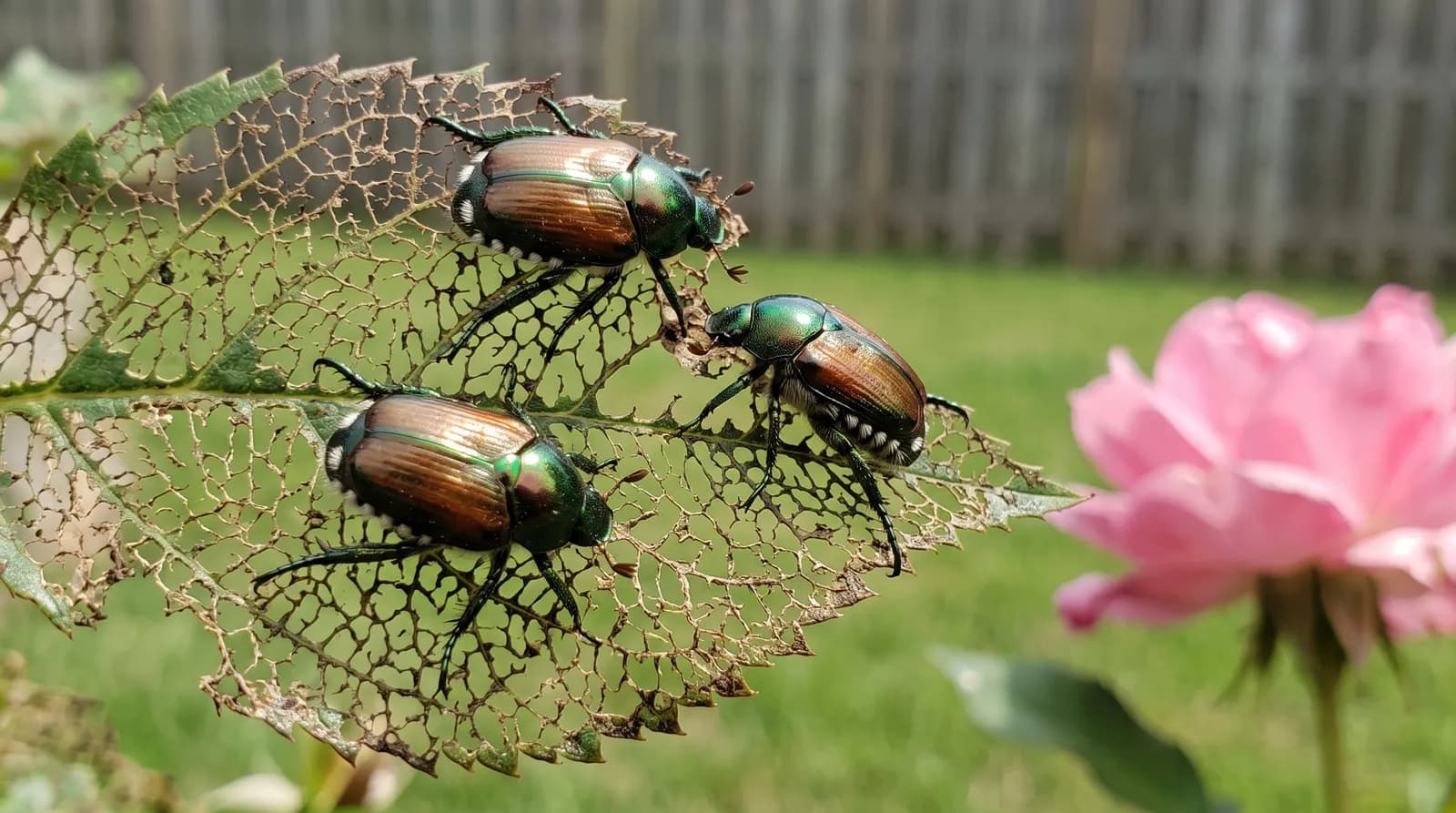
Japanese beetles skeletonizing your roses or linden in July are the adult stage of one of these grubs. The eggs they lay in the lawn become the grubs feeding that fall.
On the surface: the insects you can see
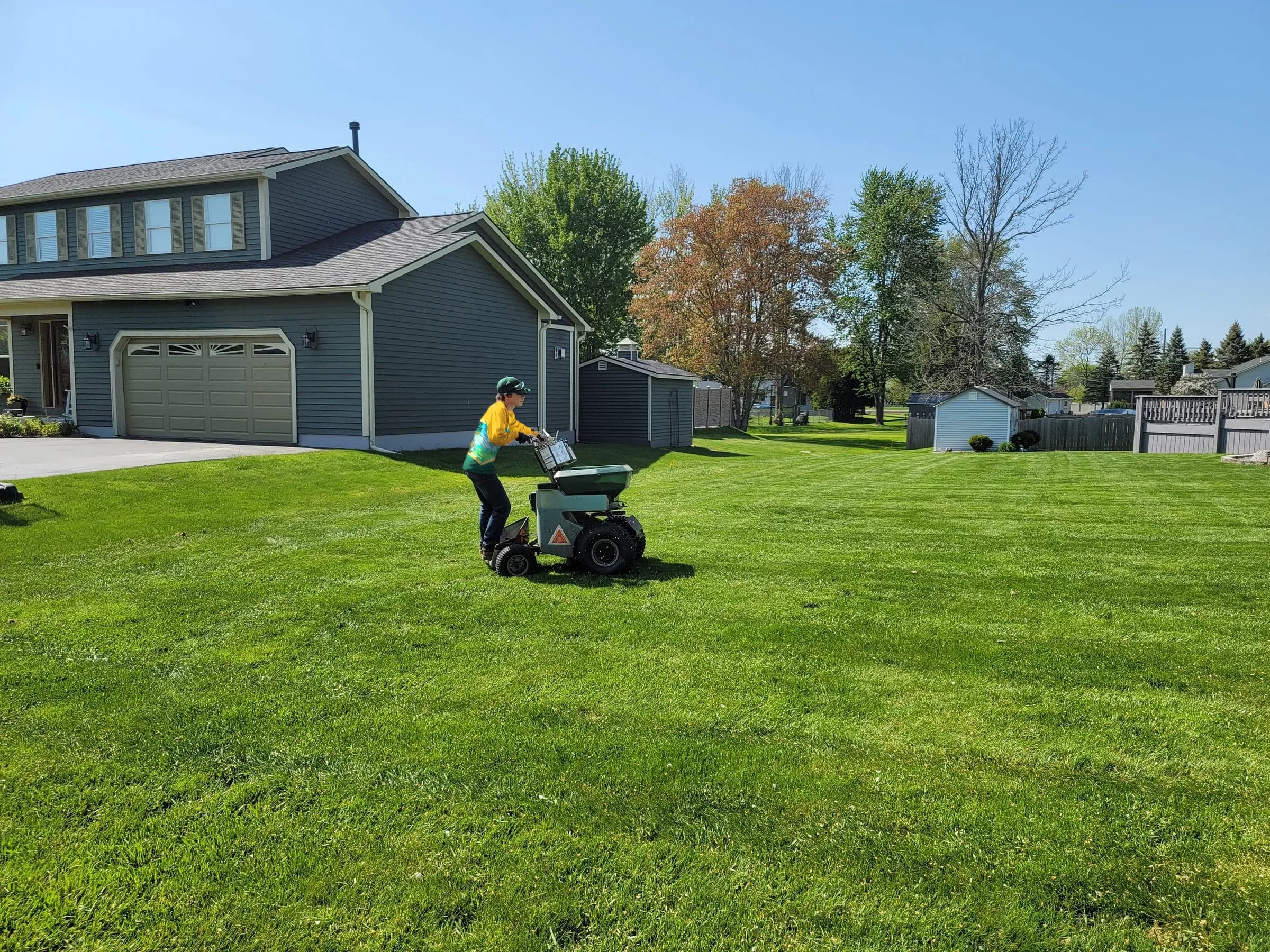
Other lawn insects live up top, in the grass and the thatch at its base. These are surface insects, and Lawn Pest Defense treats them on the lawn's surface, spring, summer and fall.
Chinch bugs
Hairy chinch bugs live throughout New York, and home lawns are where they do the most harm. They favor full sun, sandy soil and thick thatch, and they're most active, and most damaging, in July and August. They suck the sap from the grass, so the damage looks like drought: patches that turn yellow, then reddish-brown, often along the edges of the driveway or sidewalk. The difference is that grass heavily damaged by chinch bugs won't come back when the rain does.
Adults are tiny, about 3/16 of an inch, with shiny white wings, and they give off a strong, fruity smell when you pick one up. To check, push an open-ended coffee can about 2 inches into the soil at the edge of a brown patch, fill it with water, and watch for bugs floating up over 5 to 10 minutes.
Sod webworms
Small, buff-colored moths zigzagging over the lawn at dusk, or fluttering up as you mow or walk across the grass, could indicate a sod webworm infestation. The moths are under an inch long, with snout-like faces. Their caterpillars do the damage: they live in silk-lined tunnels in the thatch and come out at night to chew the grass off near its base. Look for small yellow or brown patches in sunny spots, grass clipped off at ground level, small piles of green droppings, and birds pecking at the lawn.
Crane flies
Those “giant mosquitoes” on your siding and window screens in September and October are probably crane flies. The adults don't feed at all. Invasive European crane flies were first found in New York in 2004, and by 2010 the common crane fly had turned up in 18 counties, Onondaga and Oswego among them. Their larvae, called leatherjackets, live in the top inch or so of soil, feeding on roots and crowns and coming up to chew on the grass. The result can look a lot like grub damage, or a lawn thinning out, and it tends to show in spring.
Ants in the lawn
Mound-building ants push up small, volcano-shaped piles of soil in the lawn. Mounding starts in early spring, builds through early summer and eases off by late summer. Ants in the lawn are a Lawn Pest Defense job; ants along the foundation and around the house are exterior pest control.
Fleas, and where ticks fit
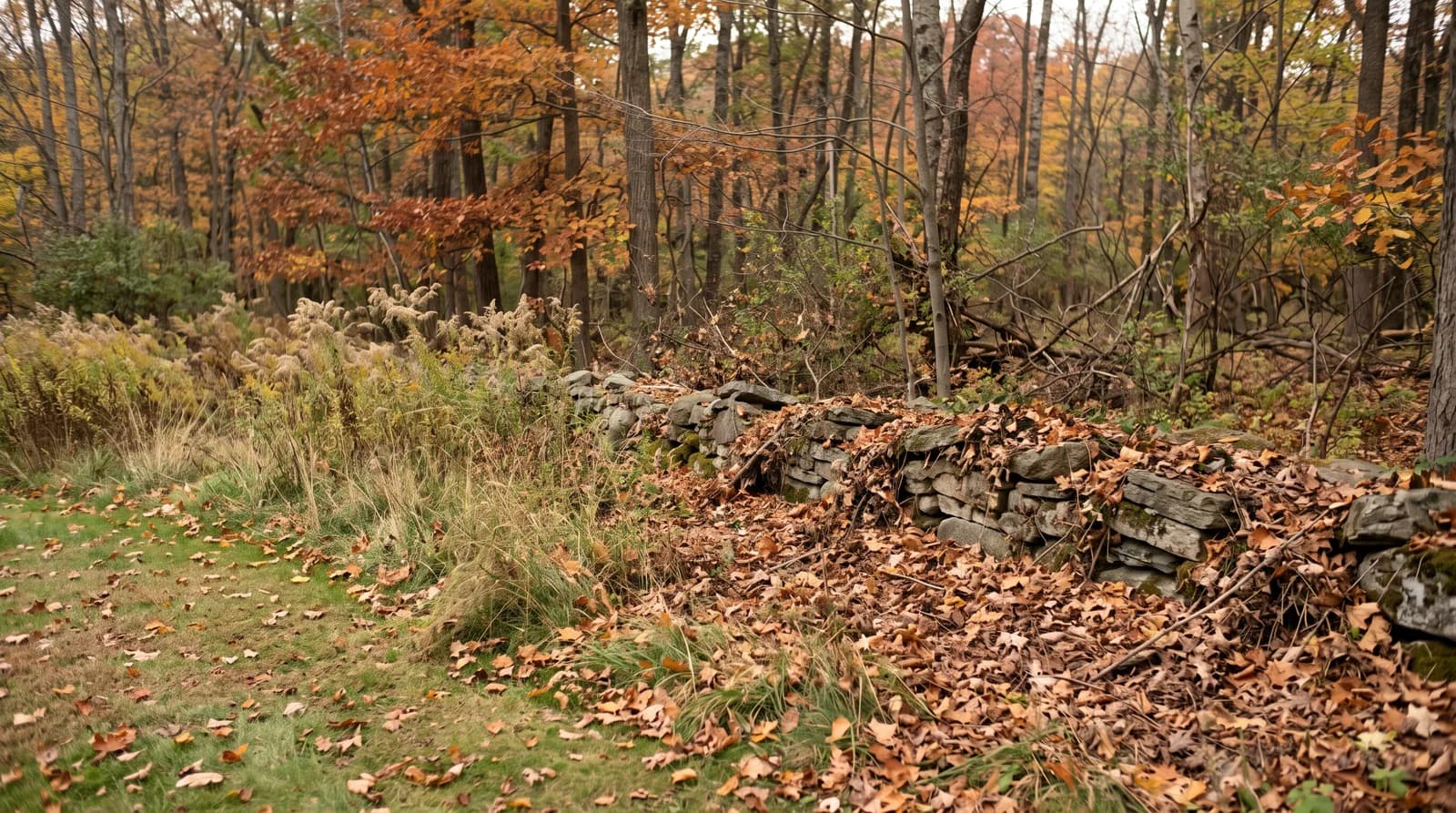
Fleas like shade and can't take the sun for long, so they wait in shady, damp spots, and wild and stray animals carry them into the yard. The CDC's advice is to focus outdoor treatment on shady areas and the places your pets spend the most time. Ticks are a different story: they don't generally live in a lawn, because they can't survive long out in the open grass. They wait in the shade, leaf litter and brush at the edges, and they turn up on the lawn mostly when a mouse, a chipmunk or a deer drops them there.
Lawn Pest Defense treats the lawn's surface for fleas, and for ticks along with the other surface insects. The shrubs, wood lines and shady edges where ticks wait are mosquito and tick control's job, and our ticks and fleas guide covers it all.
Drought or insects? A quick look
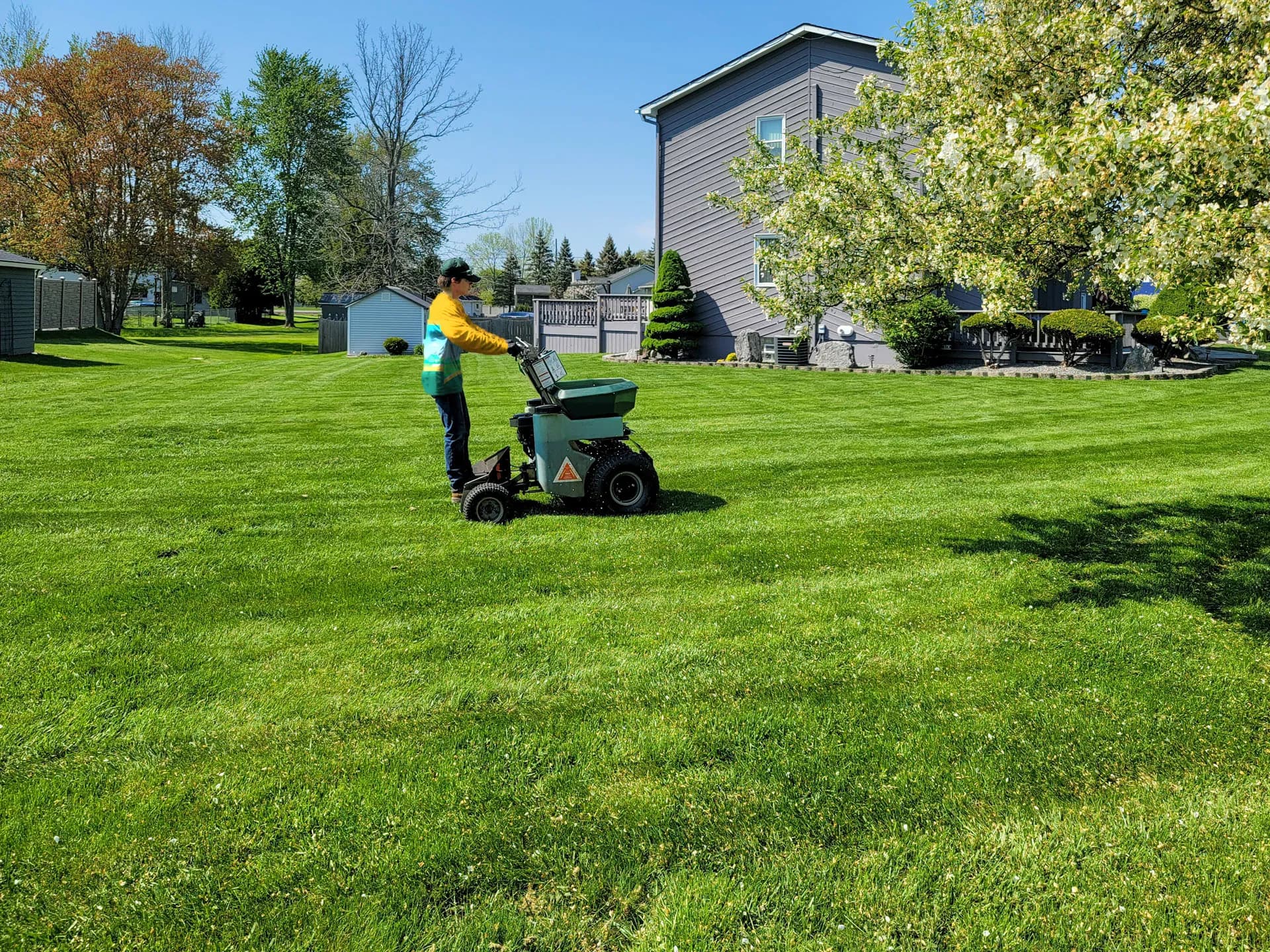
Summer brown has a lot of causes. A few quick checks narrow it down:
- Brown, but the grass holds tight when you tug it and recovers when the rain comes back: most likely dry weather.
- Peels back like a carpet, with C-shaped grubs underneath: grubs.
- Yellow, then reddish-brown in full sun, often by the pavement, and still brown after rain: chinch bugs.
- Small brown patches, grass chewed off at the base, green droppings and busy birds: sod webworms.
- Thinning in spring, with larvae in the top inch of soil: crane flies.
Not insects at all? Salt, dog spots, compacted soil and the rest are in our guide to a thin, patchy or brown lawn.
Which level includes what
Every lawn or mosquito estimate shows three levels, each building on the one before, and what's bugging you most decides which one your estimate starts from. Here's where each service lands.
| Level | On a lawn estimate | On a mosquito estimate |
|---|---|---|
| Good | The full-season lawn program: feeding, crabgrass prevention, broadleaf weed control and grub prevention. | Seasonal mosquito and tick control. |
| Better | Lawn program + Lawn Pest Defense, for the insects on the lawn's surface. | Mosquito and tick + Lawn Pest Defense. |
| Best | Complete Lawn & Mosquito Care: adds mosquito and tick control. | Complete Lawn & Mosquito Care: adds the lawn program, with grub prevention. |
So grub prevention comes with every level of a lawn estimate, and with Best on a mosquito estimate. Lawn Pest Defense starts at Better on either one. The one-time flea and tick knockdown, aeration and overseeding, and exterior pest control are extras, each priced on its own, so you only pay for what your yard needs. See the levels side by side.
Already seeing damage?
Tell us what you're seeing when you ask for your estimate. A heavy grub infestation can need a curative treatment, and we'll recommend the right next step. Late in the season, the job is mostly repair: water regularly to make up for lost roots, feed in the fall, which Cornell found helps grub-damaged turf recover, and reseed the damaged areas. Early fall is the time to aerate and overseed, and our full-season program ends with a fall feeding. Then get prevention down next early summer, before the next generation hatches.
What helps between treatments
- Water deeply in dry spells. Regular watering helps a lawn make up for roots lost to grubs.
- Keep thatch in check. Thick thatch is where chinch bugs thrive.
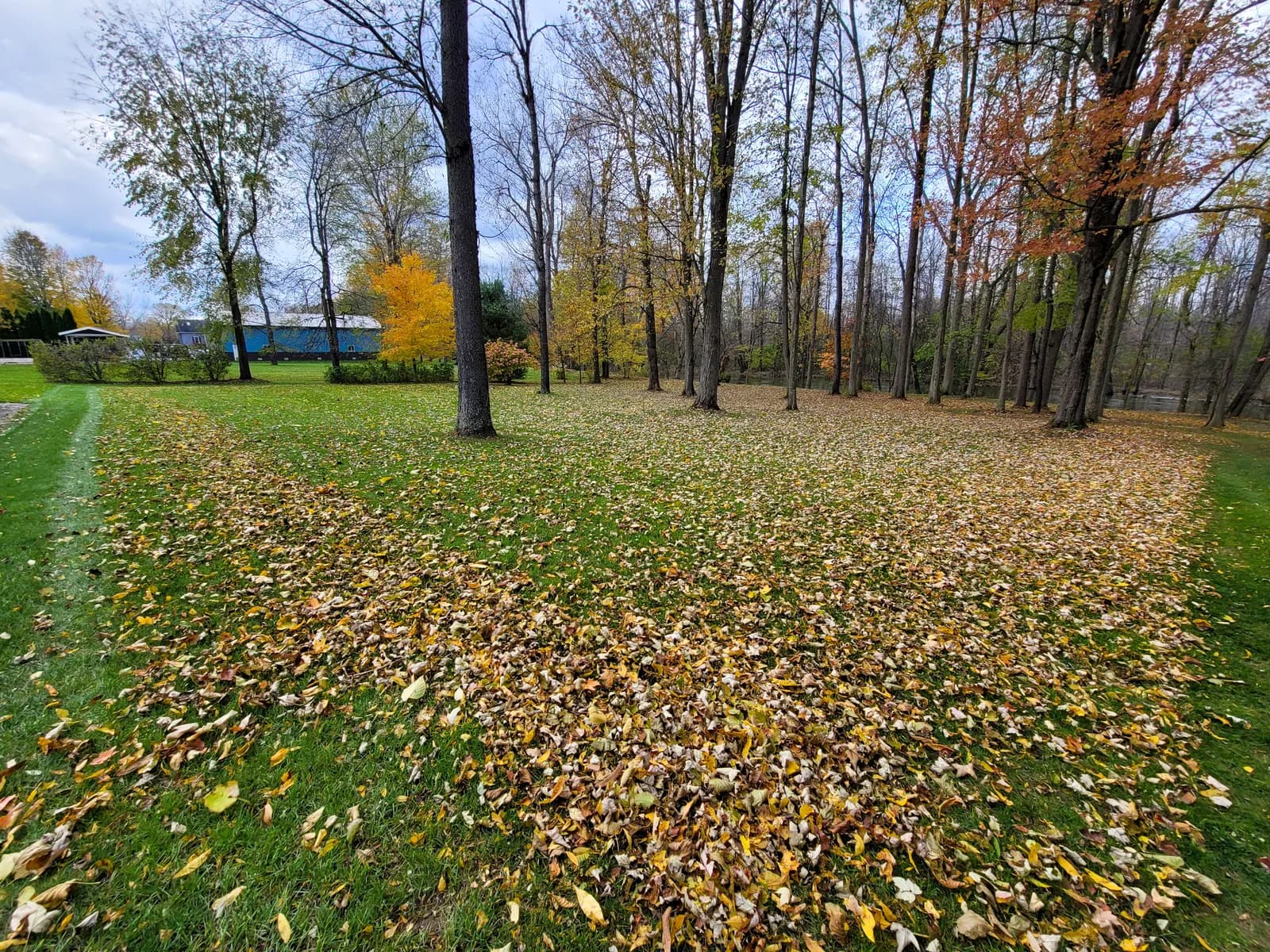
- Mow often and rake up debris. Mowing lets the sun reach the soil, which fleas avoid, and raking clears the shady, damp spots they breed in.
- Put pet food away. It keeps stray and wild animals, which commonly carry fleas, from hanging around.