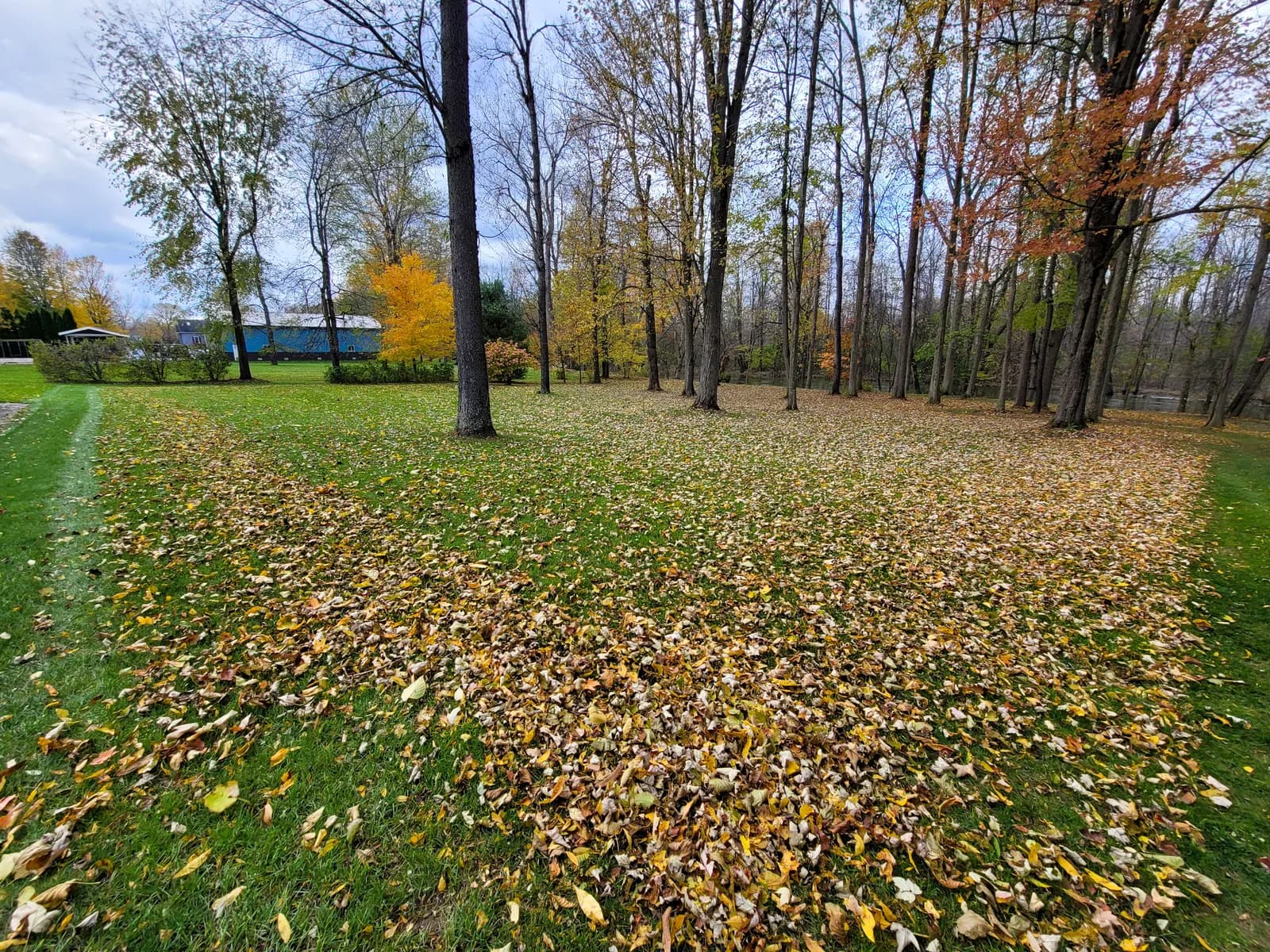
Fall in Central New York goes fast. The maples and oaks put on their show, the leaves come down, and before long the first snow is on the ground. Leaves still covering the lawn when it arrives can stay there, pressed flat under the snow, into spring. Here's what a thick layer of leaves does to the grass underneath over a Central New York winter, when to clear it, and how to send your lawn into the snow clean.
What a thick layer of leaves does to a lawn
It smothers the grass underneath
A heavy layer of leaves can smother the grass beneath it or keep new growth from coming in the spring unless it's taken away, and if you want a healthy lawn under your trees, UNH Extension's advice is to remove as many leaves as you can before winter. Jim Barrett puts it simply: “It would be a shame to let the leaves smother the lawn we worked so hard to achieve all year long!”
Under snow, it stays put
Leaves that are still on the lawn when the snow comes can stay pressed down against the grass under it for much of the winter. At Syracuse's airport the ground has at least an inch of snow on it about 80 days in a typical year.
What it can look like at snowmelt
Cornell Cooperative Extension names two snow molds that are common in New York:
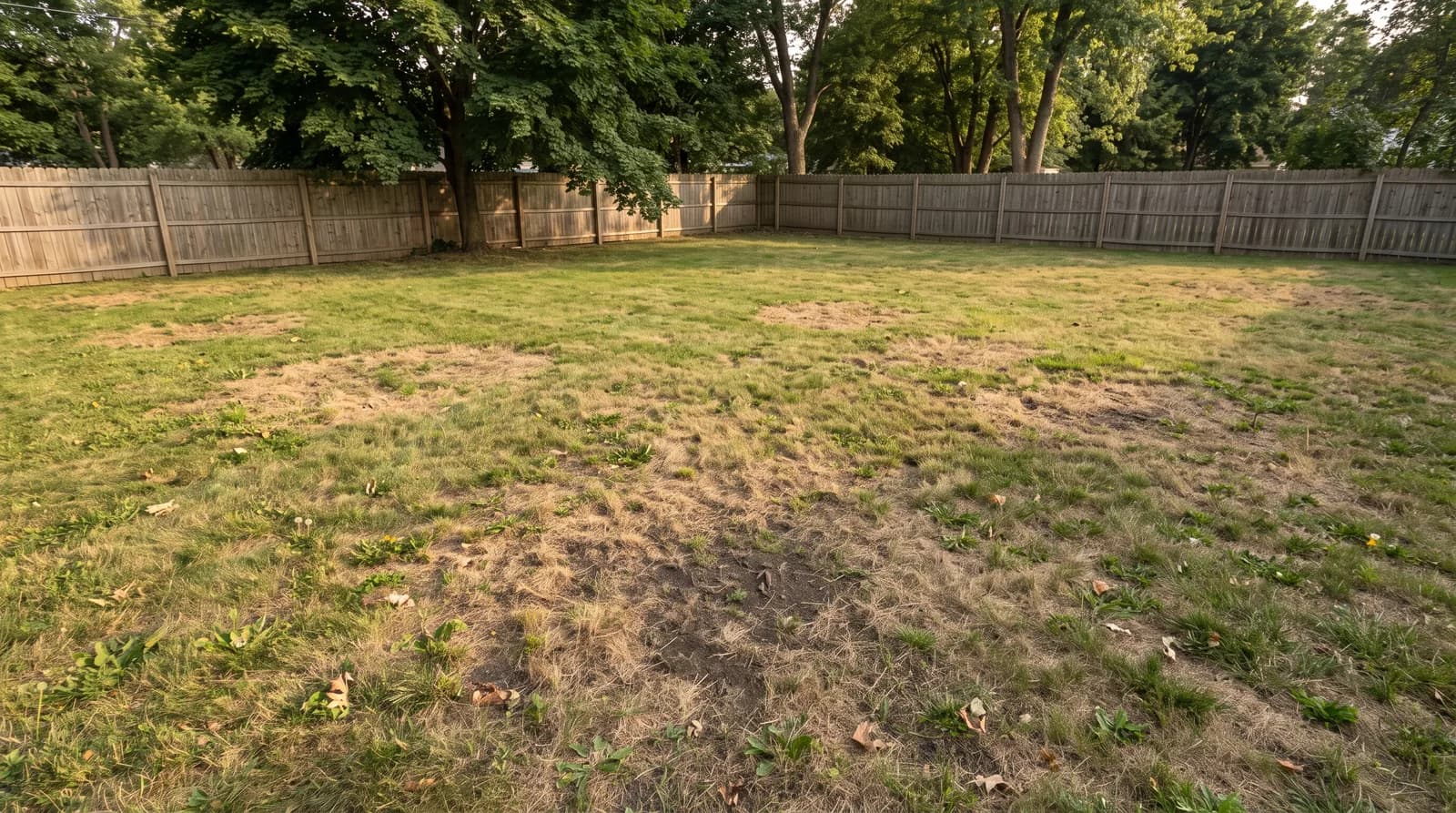
- Gray snow mold shows up as the snow recedes: roughly circular, bleached patches that can reach several feet across, with matted grass and sometimes a white-to-gray ring of fluffy fungal growth that fades as the grass dries. It's worst after long, deep, packed-down snow cover.
- Pink snow mold makes smaller patches, usually less than a foot across, and doesn't need snow: it can show up in cool, wet weather from early fall to late spring.
UNH Extension notes that leaves left on the lawn can promote snow mold. In spring, Cornell's advice is to rake matted grass to encourage new growth. Areas that stay thin can be aerated and overseeded in late summer, and our guide to a thin, patchy or brown lawn covers the other causes.
Why Central New York makes it matter
Color peaks late, and snow isn't far behind
Peak color around Central New York usually comes around October 21, says SUNY ESF's Don Leopold. Red maples often peak in the third week of October here, and Norway maples, aspens and larches not until the last week of October or later. Flowering pears don't peak until mid to late November, often under a covering of snow.
Then the snow comes and stays
At Syracuse Hancock International Airport, in a typical year:
- The first frost comes around October 19, and the first 28-degree freeze around November 2.
- November brings about 9.8 inches of snow, and December about 30.6.
- December through February adds up to about 95 inches, and the year to about 128.
- At least an inch of snow covers the ground about 80 days a year.
So the window between the last leaves and the first lasting snow can be short.
Fall is your lawn's season anyway
Grass with a deep, extensive root system builds up reserves to get through the winter and green up in spring, and late-season feeding promotes root growth; Cornell names September as the best time to feed. In our lawn program, the fall visit is a final feeding (some call it a winterizer), with weeds treated if needed. The middle of August through September is Cornell's best window for seeding, and late summer into fall is when we aerate and overseed. Fall is also an ideal time for our Calcium and Lime Soil Treatment, one of the extras you can add, so it can work into the soil before spring growth begins.
If your lawn was seeded in late summer or fall, the leaves matter even more: Cornell's advice is to remove leaves from newly seeded areas before snow covers the ground.
The leaf season around Syracuse
| When | Leaves and the lawn | Happy Habitat |
|---|---|---|
| Late summer into fall | Cornell's best window to seed runs from the middle of August through September, and September is its best time to feed. | Core aeration and overseeding, and your lawn program's fall feeding. |
| Mid to late October | Color peaks, usually around October 21. The first frost comes around October 19 in a typical year. | Waiting until most of your leaves are down. |
| Once most leaves are down | Whatever is still on the lawn when the snow comes can stay there until spring. | Fall leaf cleanup: leaves off the lawn, beds and paved surfaces, moved to your woods or the curb, following your town or village rules. |
| November | About 9.8 inches of snow in a typical November, and the first 28-degree freeze around November 2. | |
| December through February | About 95 inches of snow, and no lawn fertilizer in New York from December 1 to April 1. | |
| Spring, as the snow melts | Look for matted or bleached patches, and rake matted grass to help new growth along. The last spring freeze comes around April 29. | Your lawn program's spring feeding brings the lawn out of winter. |
What you can do before the snow
- Wait for most of the leaves to fall, then clear them, before the snow settles in.
- Clear new seed first. Leaves over a newly seeded area should come off before snow covers the ground.
- Keep mowing while the grass is still growing in the fall.
- Go easy on the snow. Where you can, avoid packing snow down over the lawn; gray snow mold is worst under deep, compacted snow.
- In spring, rake the matted spots to encourage new growth.
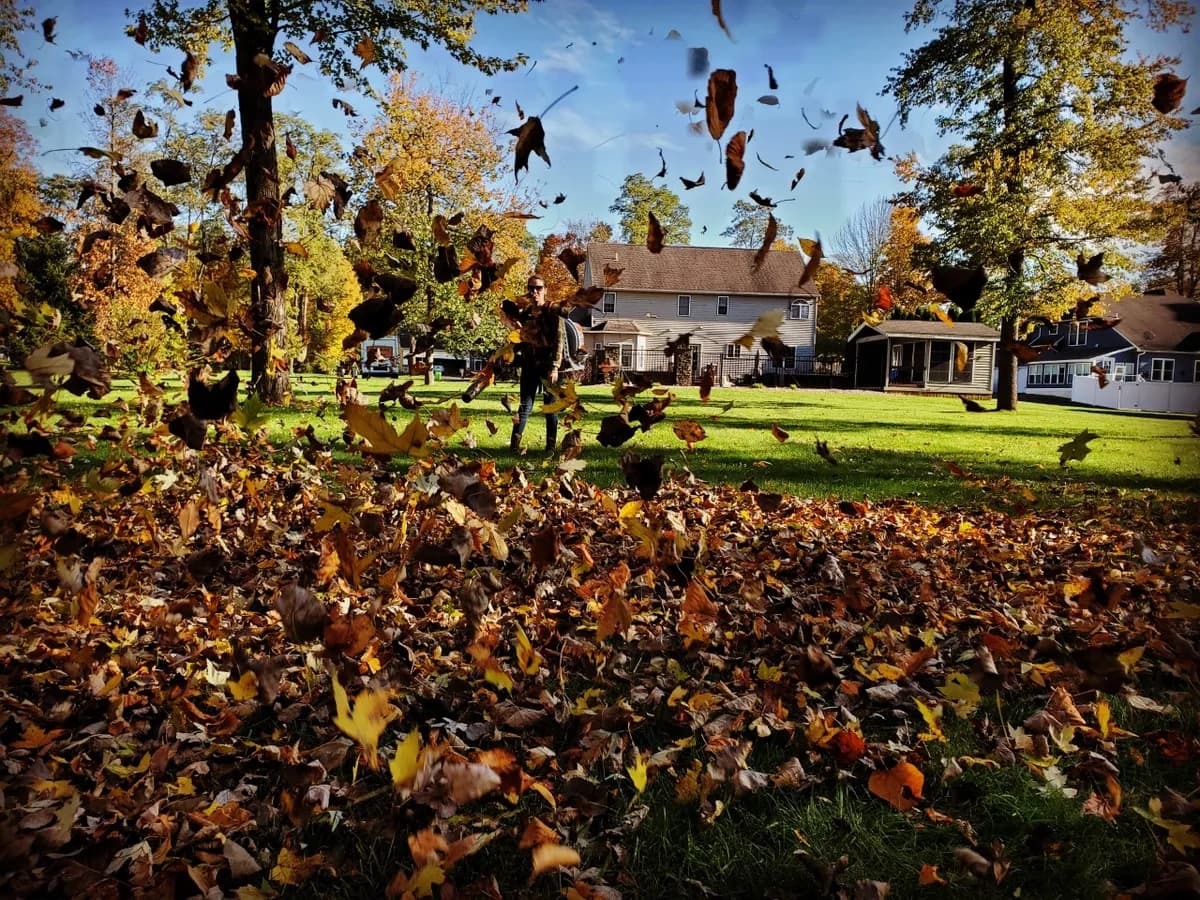
Leaf cleanup can be a daunting job, especially under big trees, as UNH Extension puts it. That's the part our fall leaf cleanup takes off your hands.
What your town does with leaves
Towns and villages around Syracuse each handle leaves their own way, with their own rules and schedules that change from year to year, so check your town's or village's page. Whatever your town does, the leaves have to come off the lawn first.