
Ants marching along the foundation, fresh webs in the window corners, a paper wasp nest under the eave by the back door: around Syracuse and across Central New York, most of the pests that bother you at home live outside and work their way in. That's why exterior pest control starts on the outside of the house, at the foundation, doors, windows and eaves. Here's how to tell what you're seeing, when each one shows up, and what helps.
Ants along the foundation
Ants live in colonies underground, under patio stones, in rotting wood and in other moist, sheltered places, and some build in wall cavities and roof eaves too. They come inside for food, and what they want changes with the season: they may prefer sweet foods in the spring and protein-rich foods in the fall. They get in through gaps around the foundation, the roof edge and the spots where utilities enter, and past worn garage door seals and doors and windows that don't close tight.
Pavement ants or carpenter ants?
- Pavement ants are one of the most common indoor ant pests in the Northeast: small, dark brown ants about 1/8 inch long. They nest under foundations, sidewalks, patios and rocks, leaving little mounds of soil nearby, and come inside mostly at night for sweets and protein. In spring, neighboring colonies sometimes battle it out on the sidewalk.
- Carpenter ants are bigger, from 1/4 to 3/4 inch, and often all black or black and red. They don't eat wood. They tunnel through wood that moisture has already softened and push out shavings that look like sawdust. The main nest is usually outdoors in a rotting tree, stump or landscape tie, with smaller satellite nests in dry spots such as attic rafters, fascia boards and wall voids.
What helps with ants
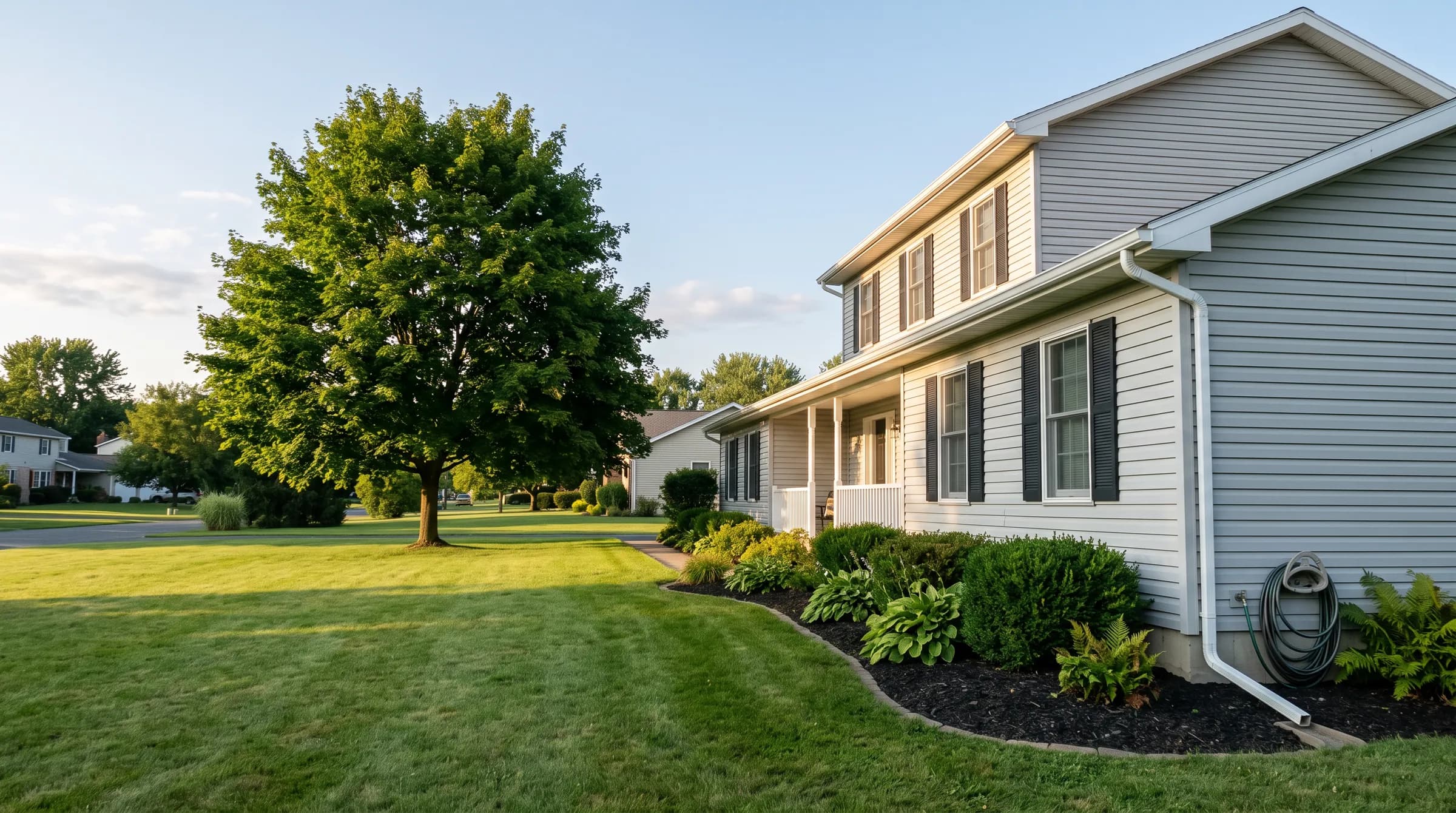
Treat where they travel. Cornell's integrated pest management program says barrier and perimeter treatments for ants “are effective when done correctly,” and that's the heart of exterior pest control: every level treats the foundation of your home, 3 feet up and 3 feet out. A few habits help alongside it:
- Wipe up crumbs, spills and splashed grease. Cleaning also wipes away the scent trail ants follow back to the food.
- Feed pets where ants can't find the food.
- Trim grass, vines, shrubs and branches off the house and at least 6 inches away from it.
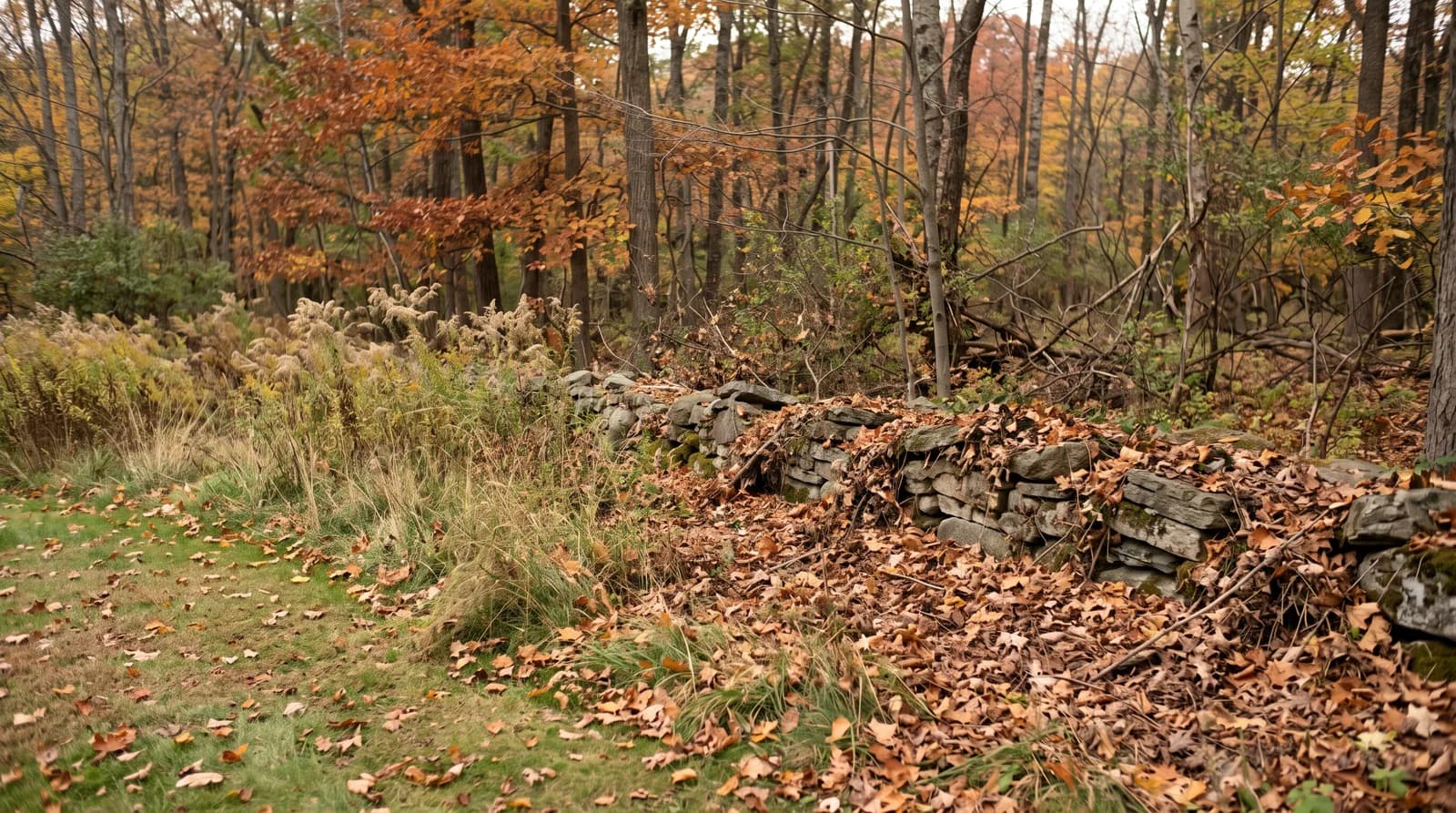
- Move stones and landscape timbers away from the foundation, where ants like to nest.
- Send rainwater away from the foundation with downspout extensions or splash blocks.
- Replace a worn garage door seal, and make sure doors and windows close tight.
Ants in the lawn itself, rather than at the house, are a job for Lawn Pest Defense, which treats the lawn's surface.
When sawdust means a bigger job
Piles of what looks like sawdust, often mixed with bits of dead ants, near a window, in the attic or along a wall mean carpenter ants are nesting in the wood. New York State IPM calls them an indicator of structural problems, because they nest in wood damaged by moisture: clogged gutters, worn flashing, peeling paint, a slow leak under a sink. That's a moisture and structure job, fixing the source of the water and the damaged wood, and exterior pest control doesn't cover structural infestations or repairs. Branches touching the house give carpenter ants a bridge in, so keep trees and shrubs trimmed back from the walls.
Spiders at the windows and eaves
Spiders aren't insects: they're arachnids, with eight legs and two body parts, and they live all over New York. Most of the ones on your house are harmless. The brown recluse doesn't occur in New York, and black widows keep to dark, damp places where people rarely reach.
Why the windows? Web-building spiders such as orb weavers like to set up next to lights and reflective glass, because light draws the flying insects they eat. A porch light by the door or a lit window under the eaves is prime real estate. The Better and Best levels of our exterior pest control treat around the windows and doors, where spiders set up. A few things help too:
- Switch outdoor bulbs to cool LED or yellow bulbs, which draw fewer insects, or light the house from the yard instead of from fixtures on the walls.
- Knock down webs regularly; repeated removal can move spiders along.
- Seal gaps around windows, doors and the sill plate, where the foundation meets the wood frame, with a flexible, durable sealant. Spiders can squeeze through tiny openings, and closing gaps helps with other pests too.
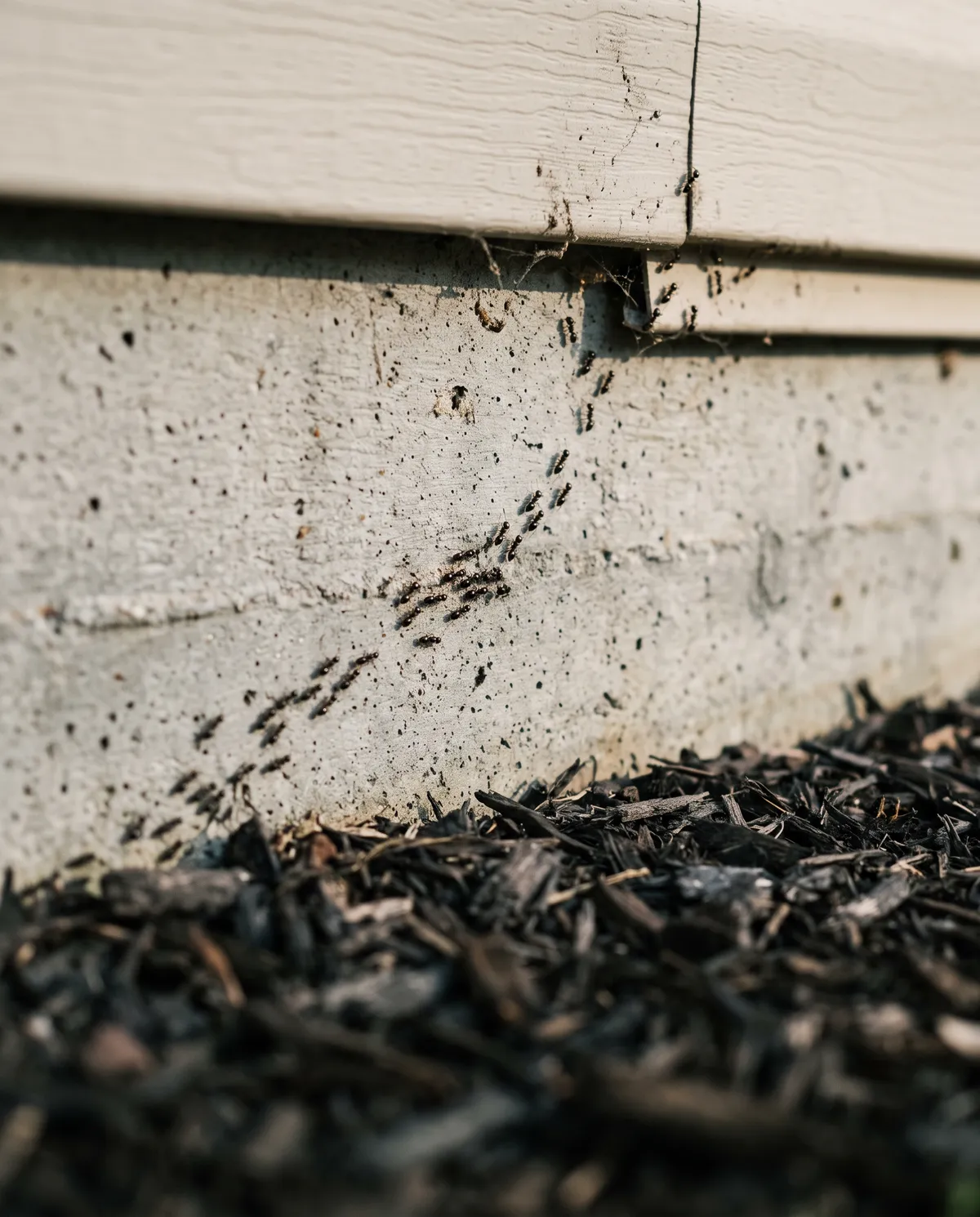
Ants along the foundation
They trail along the foundation looking for a gap at the siding or the sill.
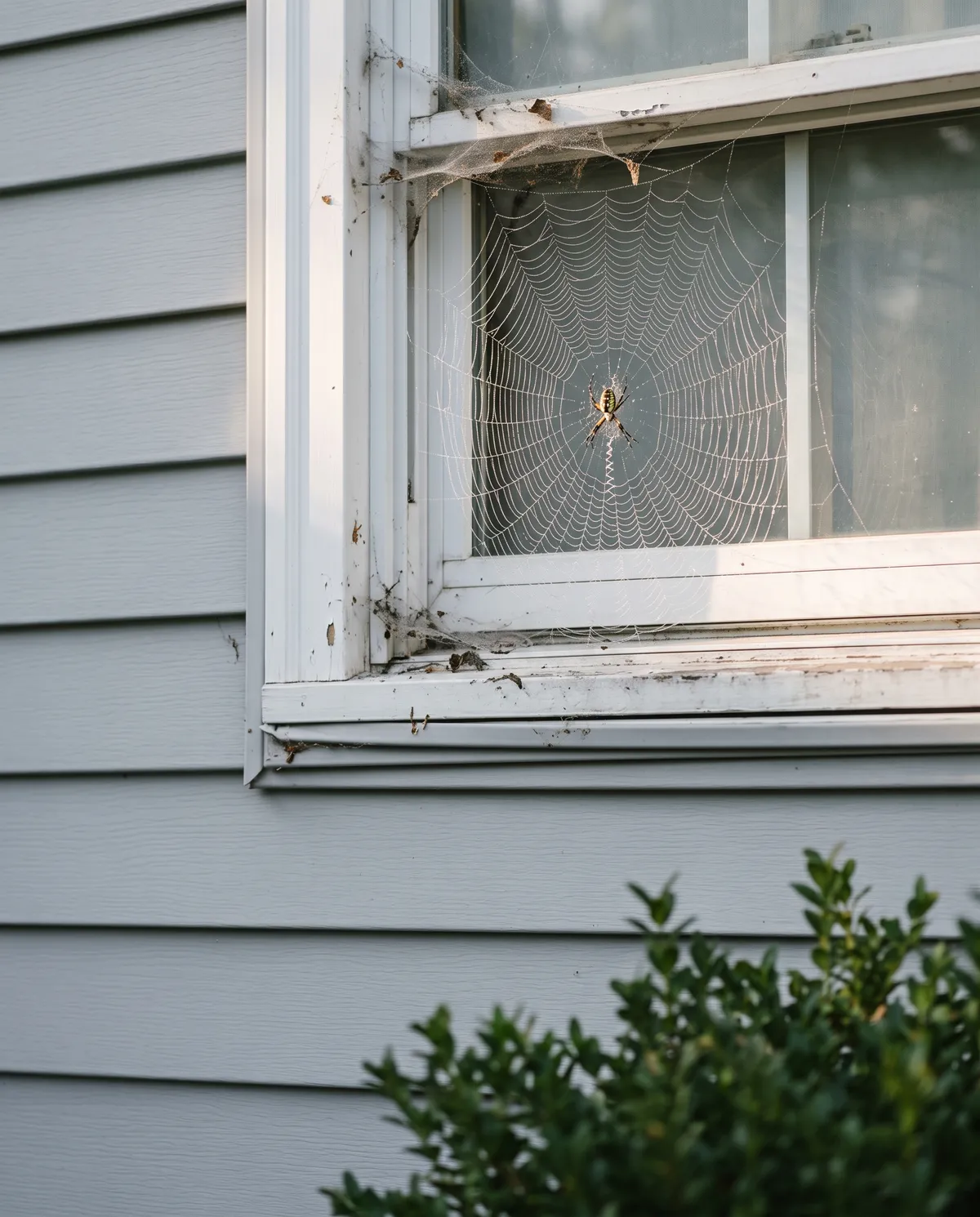
Webs at the windows
Window light draws the insects spiders eat, so the webs follow.
Wasps, hornets and bees under the eaves
Many “bee stings” are actually wasp stings, and unlike honey bees, wasps can sting more than once. Three to know:
- Paper wasps build open, umbrella-shaped combs with no cover, usually under eaves and overhangs that keep off the rain, and sometimes inside metal fence pipes or under equipment that sits unused. The European paper wasp, with long legs that dangle as it flies, is the most common paper wasp in the Northeast. Colonies stay small, a few dozen wasps.
- Yellowjackets build rounded nests wrapped in a papery envelope, inside wall voids, hollow trees, old animal burrows and stumps, or hanging under eaves and in trees. A colony can grow to 5,000 workers or more by the end of summer, and late in the season they turn up at picnic food, drinks and trash cans.
- Bald-faced hornets are actually large black-and-white yellowjackets. Their gray paper nests hang from trees, bushes and sometimes buildings, and by the end of summer a nest can be larger than a basketball.
Nests start in spring
Each of these nests is started in spring by a queen that spent the winter tucked away. Paper wasp queens start building in early spring, and bald-faced hornet queens typically in late April or May. The colony grows all summer. That's why prevention matters most where nests start: bee and wasp nesting prevention, part of our Better and Best levels, targets the eaves, soffits and doorways, and Best extends the treatment to detached structures like the garage and the shed, plus things like the swing set.
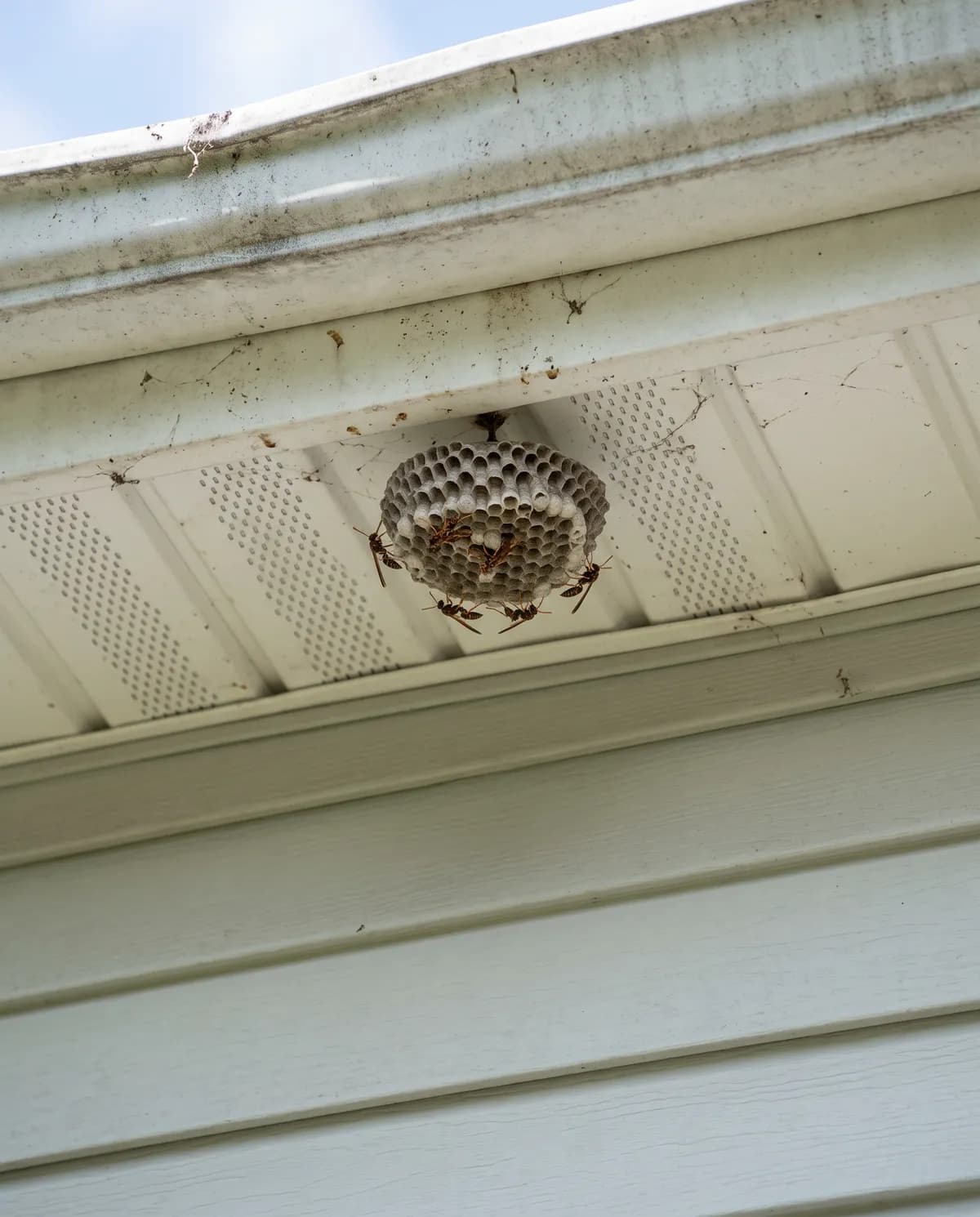
Under the eaves
Paper wasps hang their open combs where the eaves keep off the rain.
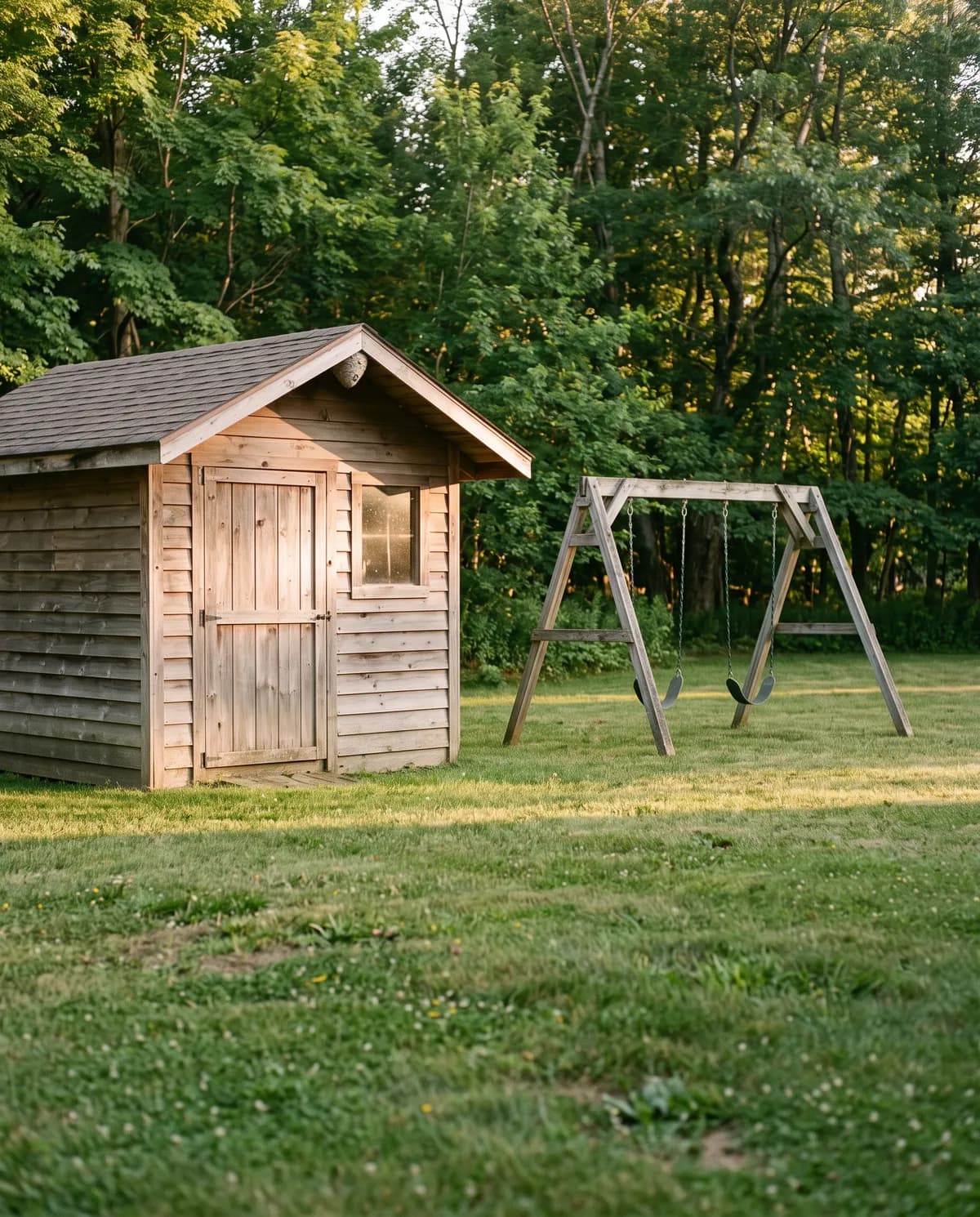
The shed and the swing set
Nests turn up on outbuildings too. Best extends the treatment to them.
Carpenter bees
Big black-and-yellow bees hovering at the eaves or a wood fence in spring are probably carpenter bees. They look like bumble bees, but with a shiny, hairless black abdomen. The males dive-bomb people but have no stinger, and the females rarely sting unless they're trapped or threatened. Females drill smooth, round holes 3/8 to 1/2 inch across, usually on the underside of bare wood: eaves, wood siding, fences. They don't eat the wood; they tunnel in to lay eggs, and they come back to the same spots year after year. Painting or staining bare wood discourages them. Treating existing carpenter bee holes isn't part of exterior pest control.
Already have a nest?
Keep people and pets away from it. Wasps defend their nests and can sting repeatedly, and New York State IPM advises extreme caution with summer hornet nests near where people spend time. Our exterior pest control is designed mainly for prevention, and we don't physically remove nests. A small wasp nest or wasp nesting activity in an area we're already treating may be treated during your regular application. If you want an established wasp nest eliminated, that's a separate service call, so let us know when you ask for your estimate. Existing bee nests aren't treated. Nesting prevention at the eaves, soffits and doorways helps keep new nests from getting started.
The fall invaders
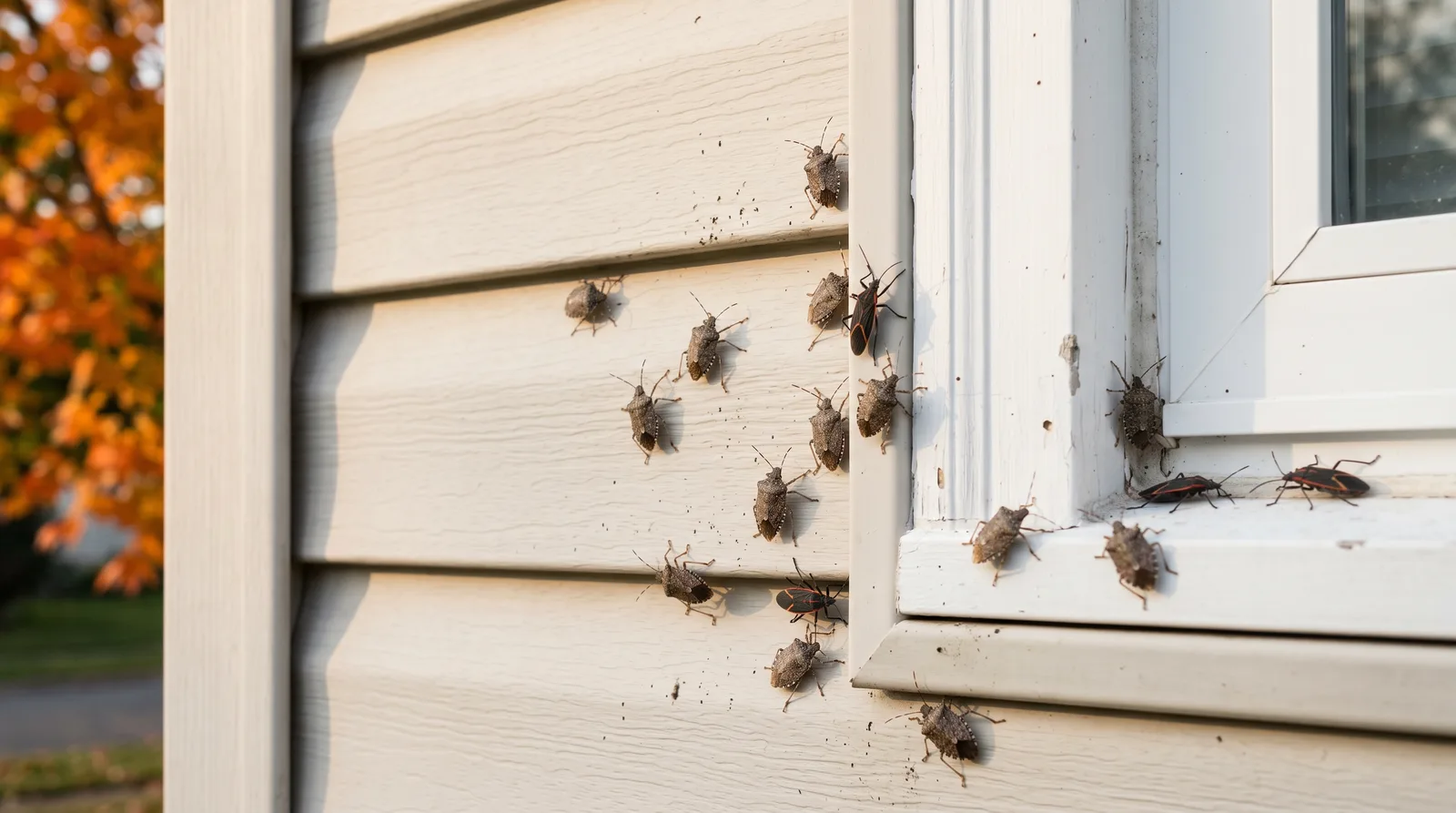
As the nights cool, brown marmorated stink bugs, boxelder bugs, Asian lady beetles and cluster flies look for somewhere sheltered to spend the winter, and your house works just fine. They gather in the warm sun on south- and west-facing walls, then work into gaps around windows, doors, eaves, foundations, outlets, light fixtures and air conditioners. Cluster flies head for the attic. On warm winter days, the ones that got in can wake up and wander to the windows.
That's what our fall invader treatment is for: an optional add-on to exterior pest control as the weather cools, for stink bugs and boxelder bugs, cluster flies and Asian lady beetles, or all four. Add it to your estimate. Sealing helps alongside it: seal gaps where wires, pipes and utility lines enter, especially on the south and west sides, and keep window screens tight and free of tears.
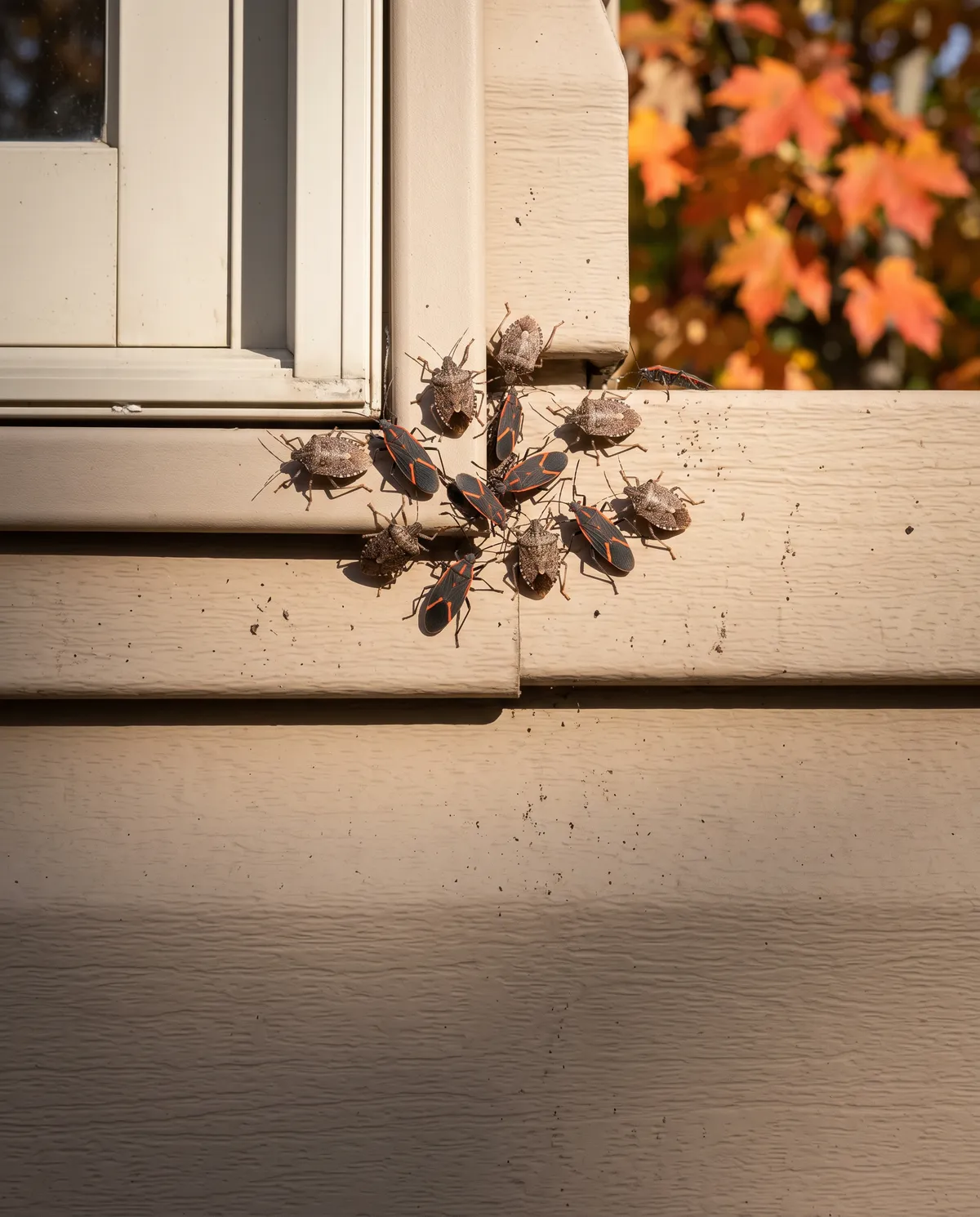
Stink bugs and boxelder bugs
Gathering on a sunny wall as the weather cools.
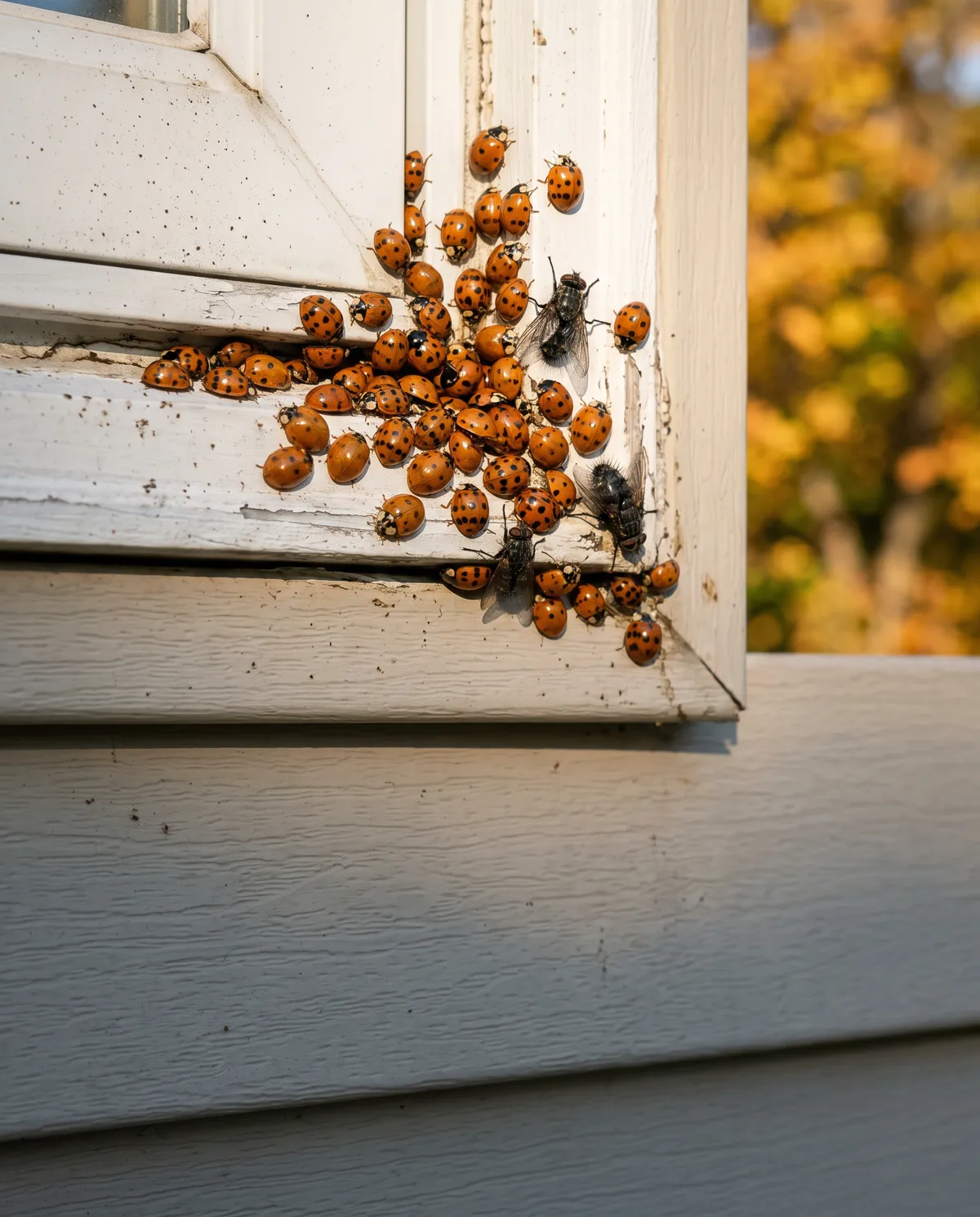
Lady beetles and cluster flies
Working into the gaps around a window to spend the winter.
Read more in our guide to stink bugs and boxelder bugs.
A year around the house
Here's the year as Cornell and New York State IPM describe it for New York and the Northeast.
| When | Around the house | Happy Habitat |
|---|---|---|
| April and May | Paper wasp and bald-faced hornet queens start new nests under eaves and overhangs. Carpenter bees come out to mate. Stink bugs that spent the winter in walls leave to mate, and ants go after sweet foods. | Bee and wasp nesting prevention targets the eaves, soffits and doorways, with Better and Best. |
| May through September | Yellowjacket colonies are active, and wasp and hornet nests grow through the summer. | Every level treats the foundation, 3 feet up and 3 feet out, for ants, spiders and other crawling insects. Better and Best add the doors, windows, eaves and soffits, where insects get in and nest. |
| Late summer | Colonies peak. A yellowjacket colony can reach 5,000 workers or more, and they show up at picnic food and trash cans. Hornet nests can be larger than a basketball, and carpenter ants mate to start new colonies. | |
| Early fall | Stink bugs, boxelder bugs, Asian lady beetles and cluster flies gather on sunny walls and look for gaps to spend the winter. New carpenter bees emerge, and ants turn to protein-rich foods. | The optional fall invader treatment, as the weather cools. |
| Winter | Wasp and hornet workers have died off and the old nests sit empty; new queens winter in sheltered spots. Fall invaders in the walls can wander out on warm days. A good time to seal wall-void openings and fix eave flashing for next year. |